On Giving Yourself a Break: or, You are a man, not God!

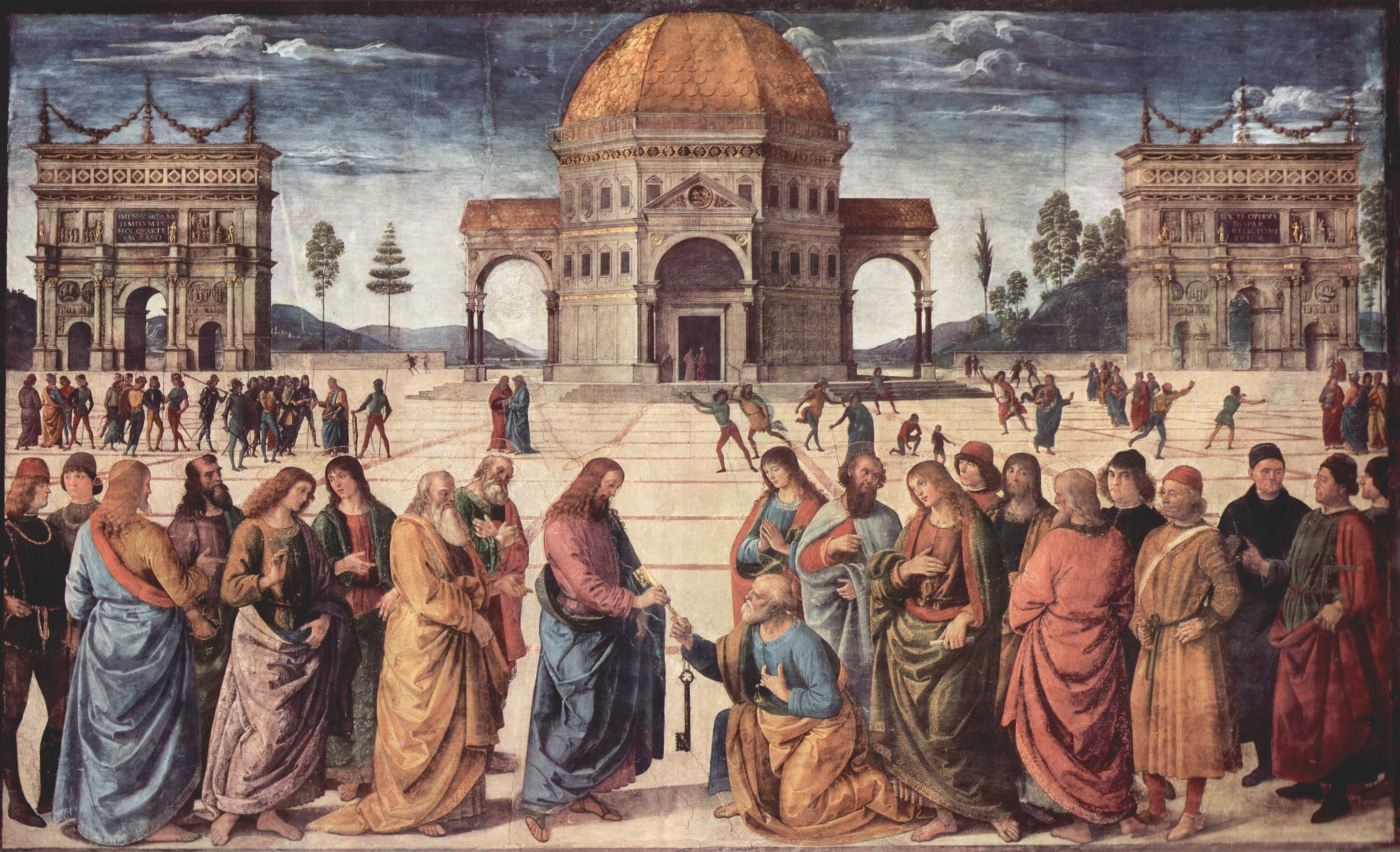
Entrega de las llaves a San Pedro (The Delivery of the Keys to Saint Peter).
Fresco, Sistine Chapel, by Pietro Perugino, c. 1481. Public Domain via Wikimedia.


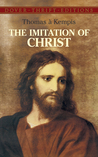
The Imitation of ChristThe Imitation of Christ by Thomas à Kempis

My rating: 5 of 5 stars


Benjamin Franklin's Virtues Journal lists "humility" as the thirteenth virtue, with the catchphrase "Imitate Jesus and Socrates" as guidance for practising humility. But what does this mean? It is easy to shrug this off with assumptions about the "What would Jesus do?" heuristic, but to specify what Franklin meant by imitating Jesus or Socrates led me to this classic text of Christian devotion from the early fifteenth century. Franklin was, at least towards the end of his life, a monotheist, and he doubted the divinity of Jesus of Nazareth. I read Kempis' work in a similar spirit. Kempis advises us to
...imitate His life and habits, if we wish to be truly enlightened and free from all blindness of heart.
"Book Two: The Interior Life" was especially enlightening, in that it echoes Epictetus. Epictetus would have us "indifferent" to externals, and while his assumptions about God or "the gods" echoes Heraclitus, Kempis is more to the point:
If you attend to God and yourself, you will little be disturbed by what you see about you.
Instances of Stoic philosophy are scattered through Book Two, less so in Book Four which looks at the taking of Holy Communion. The ongoing dialogue between "The Voice of Christ" and "The Disciple" clearly links Jesus with God (as in the Trinity), and there is clearly a Christian focus. Of course, this is a translation, and while I looked at another translation online, the differences were mostly in readability, as opposed to differences of opinion (as far as I can see). There are frequent references to what is "manly": love, self-conquest, not complaining. But also, an appreciation for the ups and downs of life. God grants His grace one moment, then withdraws it another. This is a normal thing. We should be grateful for when we experience God's grace, and patient when God withdraws His grace. Further, we should be aware that nature is about the self (as in survival), whereas grace is about the community (the social). So, "nature" would have us proud, whereas grace would have us humble. Yet, I did not have this sense of simply buckling oneself to everyone else's will - it was about self-conquest in the spiritual realm, rather than self-flagellation. I could relate this to Epictetus's and Seneca's ideas about managing our impressions - being "indifferent" to them - and James Allen's As A Man Thinketh amplifies Kempis' themes (indeed, Allen now reads as a diary-version of Kempis' Book Two). Most importantly, Kempis reminds us that "all is not lost" as we can never get it right:
You are a man, not God. You are flesh, not an angel.
I found this work mesmerising, enlightening, beautiful. Have I found the answer to Benjamin Franklin's riddle? Well, not quite. Franklin has a number of other riddles that will require a reading of Aristotle's Ethics, and there is more to be gleaned from St. Teresa of Ávila's Interior Castle. Yet I can feel that I am nearing an understanding. Of course, Mortimer Adler would say that if I cannot explain it, then I do not understand. Thankfully, Kempis tells me that I am a man, not God, so I can give myself a break. But I am glad that I took Alder's advice and I have started making notes in the margins of my books (in pencil only!), for I shall be returning to this book again and again and it will sit with my copy of Benjamin Franklin's Autobiography for ready reference.


View all my reviews

Latest Gunning Weather: Keswick IGUNNING4 Weather Station Now Live!

My Weather Station IGUNNING4 at Keswick, Gunning, atop the brick dunny (built in 1926 by the Caldwell Brothers)

My latest gadget is a wireless weather station. I have installed it atop the old brick dunny in the backyard (which now functions as part of the chook pen).

It may be an old man thing to be interested in the weather, but there is something that happens as one ages: the phases of the moon, the speed of the wind, the rainfall, all these things seem to matter more as one ages.

I don't think I ever consciously thought about the weather until I was in my 40s. Now I check the weather regularly to decide on how to dress and whether or not to take an umbrella. 

The setup for my weather station is simple but practical. It is a Digitech IC0348 Touch Screen Wireless Weather Station with USB PC Connection from Instrument Choice. I used the recommended software "Easyweather" and joined Weather Underground to share my weather station's information.

The latest weather information for Gunning is now available from my weather station via Weather Underground.

The Art of Reading: Great Books and the Liberal Ideal

Dr Mortimer J. Adler (1902-2001)

How to Read a Book: The Classic Guide to Intelligent ReadingHow to Read a Book: The Classic Guide to Intelligent Reading by Mortimer J. Adler

My rating: 5 of 5 stars


Mortimer Adler was Editor-in-Chief of the Great Books series, and a proponent of a liberal education in the Western tradition. This work is in the same vein, but it is what Adler refers to as a "practical" book. In the introduction he notes the fun that was made of his book title, with a spoof How to Read Two Books written shortly after by Erasmus G. Addlepate. As I started reading the book, I felt like I was being taught by an "old school" teacher who had to go through the basics before getting to the point some time later in life. But therein lies the charm of the work - by the end, I felt I had been reading John Stuart Mill's On Liberty - all the ideas were lining up, my liberal education had been delivered correctly, and I understood why I do what I do. What struck me most is that the four stages of reading, from elementary to syntopical, lead one to being able to organise a literature review. If ever there was a book that teaches how to systematically, and practicably, go about conducting a literature review, this is it. The process seems almost absurd when spelt out - much like Aristotle's Poetics - it reads like:
1. Select two eggs.
2. Suck.
But that would be so wrong! There is so much here, I am pleased it was my first read for the year, and I intend to add some of the techniques to my daily journalling practice (or maybe even keep a separate book journal). The two appendices are helpful. The first provides an updated list of the Great Books of the Western World (most of which are available online free these days). The second provides a series of tests on each of the levels of reading. This was designed to be "exemplary" but it was also a bit of fun, with some interesting text on Mill, Newton, Dante, et al. For anyone interested in classic works, this book is a useful guide to the art of reading, but also desktop research. One interesting change to my reading habits has resulted. Adler states that part of the fun of owning a book is that you can write in the margins. For decades I have cringed at the thought of doing this - my books are all catalogued and covered - but in Adler's book, I took out my sharpened pencil and begin to make margin notes. I suppose it is fine if I do this in pencil. And it will certainly make it easier to relocate quotes, instead of using my typically ineffective method of remembering page numbers for important quotes. I am a devotee to the Great Books cause. I was pleased to note that Adler writes that he has limited knowledge of the great books of the eastern world, and this was his main reason for not introducing "Eastern" works (a little Orientalism goes a long way), but given the work was written in 1940 and then revised in the 1970s, it was ahead of its time. There is something about the liberal democratic ideal and reading that Adler points to time and again, and while my own ideals have been systematically destroyed through practice, Adler paints an honourable picture of liberalism as it is rarely practised these days. This is not an easy book, and for some it might be off-putting, but for me, I learnt more in this volume than I have in the last five years.


View all my reviews
© 2025 Dr Michael de Percy
made with by templateszoo