Clausewitz: Lessons in Social Scientific Inductive Theory from On War

Prussian Army during battle of Mollwitz 1741, anonymous plate circa 19th century [Public Domain] via Wikimedia.


On WarOn War by Carl von Clausewitz

My rating: 5 of 5 stars


My first full reading of Clausewitz (accepting that the Penguin volume does not include several books on early nineteenth-century military operations) impressed upon me the essence of philosophy and theory as it applies to the social sciences. 

This Penguin volume is interesting in that it includes an introduction from the editor of the 1908 version used by the US military (Colonel F.N. Maude) and a later introduction from the time of the Cold War (1966 and the early stages of the Vietnam War) by Professor Anatol Rapoport. I have long viewed On War much the same as one might Adam Smith’s Wealth of Nations: the quote “war is the continuation of policy by other means” proving to be as similarly unhelpful “as if by an invisible hand” in comprehending the extent of the philosophical grounding in store for the avid reader of classic literature. 

Reading Clausewitz is like reading John Stuart Mill: almost every lesson is so ingrained in the education of political scientists (or in this case, from my training as an army officer) that it seems like nothing new. From morale being one third of combat power (p. 424) to the implied role of the infantry (which I memorised years ago and can still recite), to the essence of war and the changes heralded by the Napoleonic period to the future of absolute or total war that would arrive in 1914, these things I mostly knew. 

But the references to philosophy (the Stoic’s negative visualisation gets a run), to how to develop a theory, to the social scientific view of the world that is largely inductive (and unfalsifiable if one is a fan of Karl Popper) astounded me. That I could learn so much unexpectedly was a blessing. Some ideas are worth noting. First, in the introduction, Rapoport writes of Clausewitz (p. 72):
Those without specialized mathematical knowledge (e.g. political scientists, administrators, military men) tend to conceive of their expertise as that of the artist rather than of a scientist.
Rapoport explains (p. 431):
In the exact sciences, theory is used precisely in the sense rejected by Clausewitz, namely, in the sense of a collection of theorems deduced rigorously from postulates formulated in ‘if so… then so” terms, i.e. as formulas. Clausewitz here uses ‘theory’ in the sense often used in the social sciences, namely, as a synthesis of concepts which illuminate the subject matter without necessarily enabling us to make specific predictions or to control specific situations.
This was illuminating, given that only today I was rummaging through the inductive nature of my own theories developed from research and then reading of Popper’s critique of historicism (another discussion that is new to me). 

An interesting reference from the notes is one of what was probably the most outdated books of the twentieth century even before it was published: Cavalry in Future Wars written in 1908. Rapoport argues that by then, cavalry in its traditional form had no future (Henry Chauvel aside). Finally, Clausewitz subordinates the military to the political without diminishing what he considered to be its noble qualities:
In one word, the Art of War in its highest point of view is policy, but, no doubt, a policy which fights battles instead of writing notes.
Clausewitz frequently argues that the Art of War can only be learnt through practice. While policy-makers might best be suited to determining the aim of war (as policy) from book-learning, military commanders could never attain the artistic qualities necessary for successful military campaigning without direct experience of the fog of war. 

As I have recently moved into research that involves practitioners, Clausewitz gives me some hope for my theoretical aspirations and the use of induction in my work. This was a wonderful surprise, a circumstance that often repeats itself when I embark on a cover to cover reading of books that I thought I knew. 

I must admit that this is the second volume of this work I have purchased. When the first arrived and I discovered it was an abridged version, I donated it to my local library. When this book arrived (Penguin classics are ‘unabridged’ – this version is unabridged from the 1908 abridged version), I was disappointed but pushed on out of frustration. 

I must say it was worth it and I will be recommending this as a reading project for others in my field who, like me, might also think they know Clausewitz.



Festschrift Podcast: Professor John Wanna: Career Reflections

Professor John Wanna and Dr Michael de Percy at their recent book launch in Canberra, 4 September 2018.
Photo Credit: John Masiello.

Professor John Wanna has studied politics, policy, and public administration since the 1970s and has published over 50 books and supervised over 50 research students. He is the inaugural Sir John Bunting Chair in Public Administration at the Australia and New Zealand School of Government based at the Australian National University.

He is a Fellow of the Academy of the Social Sciences in Australia (ASSA) and National Fellow of the Institute of Public Administration Australia (IPAA). He received IPAA's Meritorious Service Award in 2014 after serving for twenty years as the editor of the Australian Journal of Public Administration.

John’s scholarly contribution is to be honoured with a Festschrift in September 2018, supported by ANZSOG, the ANU, and Wiley Publishing.

In this podcast, I interview Professor Wanna and ask him to reflect on his career.

John's personal website is at http://www.johnwanna.com/.

A number of John's books are available for free download at ANU Press.

The podcast is available on Soundcloud below:


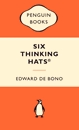
Edward de Bono's Six Thinking Hats: Revisiting corporate learning, 1990s-style

Six Thinking Hats from the master of lateral thinking. Image Credit: Nelly Ghazaryan [CC BY-SA 4.0] via Wikimedia.


Six Thinking HatsSix Thinking Hats by Edward de Bono

My rating: 3 of 5 stars


As a young staff officer in an artillery regiment in the mid-1990s, I was tasked with learning more about de Bono's Six Thinking Hats in preparation for an officers' retreat. The commanding officer at the time was completing an MBA and he had developed a vision statement and vision motto for the regiment. For many of the officers and men, it was deemed quite unnecessary. 

The deputy principal at Brisbane's Clayfield College was an expert in de Bono's work, and I met with him to learn more. The one thing that stuck with me was his approach to using random words as a 'provocation' (p. 131). His approach was to have a list of sixty random nouns, numbered one to sixty. Whenever he needed to 'po', he would look at the minute hand on the clock, go to the corresponding number on his list, and then use the word as a way to shake things up in his thinking. 

On reading the Penguin version of this book for the first time, I noticed that the deputy principal at Clayfield College gets a mention (p. x), and then I learnt how much I had forgotten about de Bono's process. 

It was enlightening because I have used the Six Thinking Hats in the 'leading creativity' part of my leadership teaching, but with large classes and students in groups being introduced to the method for the first time has rarely proven any more than an introduction. It has often meant that I have inadvertently used the hats incorrectly, as people would end up using the same hat for the session (p. 7). 

Based on my re-reading of de Bono, I will try again in tutorial classes, which tend to be smaller, and I will act as the blue hat and focus on an issue of common concern. This problem is quite obvious. As former Vice Chancellor of the University of Canberra, Professor Stephen Parker once said:
A university is a collection of disciplines brought together by a common concern over car parking.
I will use car parking as it is an issue that most students struggle with every time they attend class. 

It was interesting to revisit 'parallel thinking', and to ensure the hats are used in this way. In effect, everyone must be looking in the same direction, something that falls apart when the hats are used by separate individuals rather than as a group (p. 4). 

I continue to find de Bono's critique of the 'Greek Gang of Three' fascinating (p. 1). 

In my leadership classes, we discuss the opposing theories of Fred Fiedler versus Hersey and Blanchard. Fiedler suggests our leadership style is either task or relationship focused and it is difficult or impossible to change, whereas the Hersey-Blanchard model suggests we can and should change our style to suit different situations. While not referring to leadership styles per se, de Bono suggests that (p. 140):
I don't think it is possible to change personality... [however] the tragedy mask and the comedy mask are separate. The actor himself does not change.
Finally, the concept of the creative pause is useful. One should stop, pause, and put on the green hat just because... for no reason, even if everything is on track, just stop, pause, and 'po'. 

I have been using what I call the Stoic 'deliberate pause' when making decisions to assess externalities. But I will now try to deliberately pause from time to time to also consider the possibilities. I think I can do this rather well, although I do have an efficiency preference for using the 'standard situation box' (p. 3) to deal with administrative matters and then only think creatively about the things that fall outside the box. But using the creative pause is something I would like to be more conscious of until it becomes a habit. 

There is something to be said about de Bono's method, and I believe if used properly, it can wield innovative results. At the same time, I think the number of management fads has turned most people off any form of corporate game, and we have all experienced vision statements that say one thing while the organisation does the exact opposite to its stakeholders. 

De Bono's method, however, does not need to be seen as a fad if the underlying philosophy and design of the systematised thinking process is considered. The concept of design thinking in all aspects of life is on the rise at the moment, so I would recommend revisiting the Six Thinking Hats as a way to bring design thinking to bear. But we shall see.


View all my reviews

© 2025 Dr Michael de Percy
made with by templateszoo