Eyes Wide Shut: The book is better than the movie

Mask from the film Eyes Wide Shut by Stanley Kubrick. Exhibit at EYE Filminstitut Netherlands, Amsterdam. Photo by FaceMePLS via Wikimedia[CC BY 2.0].


Dream StoryDream Story by Arthur Schnitzler

My rating: 3 of 5 stars


While reading St Theresa's Interior Castle, I needed a diversion to bring some interest back to my reading. A simple way to ensure I have a steady supply of novels to read is to buy all of the Penguin Classics series. This international series brings to the reader authors and stories that would otherwise be neglected by we Antipodean Anglophones of little news from the Otherphones. Unless the story was the plot of a movie. 

I knew nothing of Austrian author Arthur Schnitzler, nor of his novella Dream Story. As I read it, I couldn't help but think of Stanley Kubrick's final movie, Eyes Wide Shut. When I looked up Arthur Schnitzler just now, I discovered that the movie was indeed an adaptation of this very novella.

Such discoveries are pleasing and bring an undeserved sense of achievement, much like becoming a grandfather. 

But I recall hating the movie when it first came out. Bearing in mind, of course, that at that time I thought Starship Troopers was the greatest movie ever made. But long since my late 20s, I have revisited many of Kubrick's movies (as I have done with Woody Allen), and there is certainly something of the genius there. 

(I still struggle with Clockwork Orange, but will read the book and see if that helps. After reading this novella, I intend to watch Eyes Wide Shut again and see if my opinion changes.)

But as for this novella, I read the lofty dream-like scenes before sleeping rather late, and then awoke to finish off the last few pages where reality hits Fridolin, our protagonist. My state of being suited the plot rather well. 

One scene in the Kubrick movie had Tom and Nicole smoking a joint, and this must have been where Fridolin's wife, Albertine, tells him of her desire to have an affair with a young naval officer. I recall being annoyed by that scene - Kidman didn't have the innocence that Albertine portrays in the novella.

The innocence brings out the stupidity of Fridolin's jealousy in sharp relief, whereas Kidman's character, I recall, was really trying to stir things up. This means some of the key themes of courage and class-based morality are lost in the movie.

The movie, too, seems to direct the audience too much, whereas the novella doesn't answer all reader's questions; it is left to the imagination. Schnitzler does this well.

This is a very quick read, but of course, the book is better than the movie.


View all my reviews

Intellectual Underpinnings: or, You expected a revolution without firing squads?

Slavoj Žižek. Political radical, celebrity philosopher, and the Elvis of cultural theory. Photo: Andy Miah [CC BY-SA 2.0].


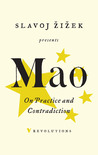
On Practice and ContradictionOn Practice and Contradiction by Mao Zedong

My rating: 5 of 5 stars


I am often critiqued for conflating ideas.

<conflate>
I am fascinated by founding documents of social movements, political ideologies, and nation-states, and I also enjoy protest music, particularly the folk variety. Maybe this is a contradiction, in that one can be fascinated by the founding documents while supporting radical music designed to upset tradition. I don't know. 

But I do know that Australia's Constitution is suitably a bureaucratic administrative document that doesn't mention citizens, free speech, or human rights. This is a country that banned a Bob Dylan song.

China also banned Bob Dylan from performing in 2010.

(Did you know that the Government of Utah in the United States still kills people by firing squad? The last time was Ronnie Lee Gardner in 2010.)

Yet China is a republic forged from revolution. It is strange how pervasive conservatism can become. Especially when one considers these foundational philosophical writings by Mao Zedong. 
</conflate>

When reading Mao's book of quotations, I become interested in reading more of his historical writings. When teaching political ideologies, I have always included Mao's development of communist theory to incorporate peasants (who were technically not part of the proletariat, and certainly were not to be trusted, according to Lenin and Stalin). 

Yet today we have the next global super-power - displaying all the hallmarks of a capitalist industrial behemoth - still evolving out of what will soon be the world's longest experiment with socialism (the Soviet's lasted 74 years, the People's Republic of China is approaching its 70th birthday next year). Socialism, albeit with Chinese characteristics. 

But where did the ideas come from and what theory guided China's implementation of socialism? 

This work provides at least some of the answers. The introduction is by "the Elvis of philosophy", Slavoj Žižek, someone whose ideas I have grown fond of over time. I note with a little surprise that many suggest Žižek's introduction does not add much, but after reading it twice, it is clear that Žižek knows what he is talking about. 

In terms of theory, Mao suggests that the "negation of negation" is simply the bigger fish consuming the smaller. But Žižek points out that this is a critical mistake for Mao Zedong's thinking. For Žižek, Tony Blair's Third Way incorporated Thatcherism - you know you have really won not when you have destroyed the enemy, but when the enemy begins speaking your language. 

There is much more to discover in Žižek's short introduction, but it is certainly worth at least two readings. As for Mao's writings, there is so much to cover it is clear that he was a genius, with an enormous intellect. It is interesting that the United States, the most liberal (individualistic) country in the world, had a group of "founding fathers", whereas China, with its socialism with Chinese characteristics and its sense of filial responsibility, had an individual "founding father". Again, contradictions. 

Mao also writes of the eleven types of liberalism which must be combated. He also gives words to an idea I have when I observe my dogs eating. If you give one dog something to eat, it will sneak off to enjoy its meal individually. But the other dogs, seeing one has something and the others do not, will insist on equality (in terms of food distribution). For Mao (p. 105), combating liberalism is important as it is like a cancer on Marxism:
...they talk Marxism but they practice liberalism; they apply Marxism to others but liberalism to themselves.
The book includes a critique of some of Stalin's economic work (and some of Mao's critiques of Lenin) and outlines rather substantially Mao's ideas about overcoming contradiction, right analysis to bring the universal to the particular and back to the universal, to discover the essence of contradictions, and so on. All brilliant thinking. 

Mao also speaks of his pedagogy. Interestingly, this echoes Theodore Roosevelt's The Strenuous Life, but with more of a focus on working the land with the peasants to not only harden oneself, but to actually be the proletariat, to join in the struggle. 

A disturbing perspective, which other commentators see as the rationale for so many deaths during the Great Famine (and following the Great Leap Forward - clearly, there is a difference between theory and implementation), relates to Mao's view of the Atom Bomb. In effect, China's millet and rifles would surely overcome the United States' planes and atomic bombs.
We have two principles: first, we don't want war; second, we will strike back resolutely if anyone invades us... The Chinese people are not to be cowed by US atomic blackmail.
Mao justifies this stance through the historical processes of socialism: The First World War increased the number of socialists (via the Soviet Union); the Second World War increased the number of socialists again (via the People's Republic of China); and thus the Third World War will increase the number of socialists yet again, and so on until we all live happily ever after. 

But Mao does what all good philosophers do (from the time of Heraclitus), and maps out his understanding of physics, biology, the universe, and so on. No philosophy is complete without an understanding of the world. And herein lies the historical value of the work in this book. Mao was a prolific author, and, although Mao's former comrade Deng Xiaoping, undid all of his work in the space of a few years, Mao remains revered in mainland China. 

Later, when the victors control the past, Mao's cult status can only increase. 

But that hasn't stopped one New York Times reviewer of Mao: The Unknown Story by Jung Chang and Jon Halliday, suggesting
If Chairman Mao had been truly prescient, he would have located a little girl in Sichuan Province named Jung Chang and "mie jiuzu"-- killed her and wiped out all her relatives to the ninth degree. But instead that girl grew up, moved to Britain and has now written a biography of Mao that will help destroy his reputation forever.
And this is the general tone of the reaction of most of the commercial world to Unknown Story

Nevertheless, the academy responded with Was Mao Really a Monster? The Academic Response to Chang and Halliday’s Mao The Unknown Story, and basically tore it to shreds for dodgy research and re-purposing evidence to achieve an agenda (is this negating the negation?).

The things is, and despite the problems cleverly identified and articulated in Žižek's introduction, Mao's philosophy is comprehensive, and provides a systematic approaches to understanding society, for better or worse. 

I intend to study Mao more seriously as a result of this book and hope to read my copies of Mao: The Unknown Story and Ross Terrill's Mao: A Biography in the near future.

I am also fascinated by the link Mao makes between contradiction and identity (p. 94), and how this relates to the idea of identity and contradiction outlined by Joss Whedon in his 2013 Wesleyan Commencement Address.


Dr Sax isn't writing, it's just typing...

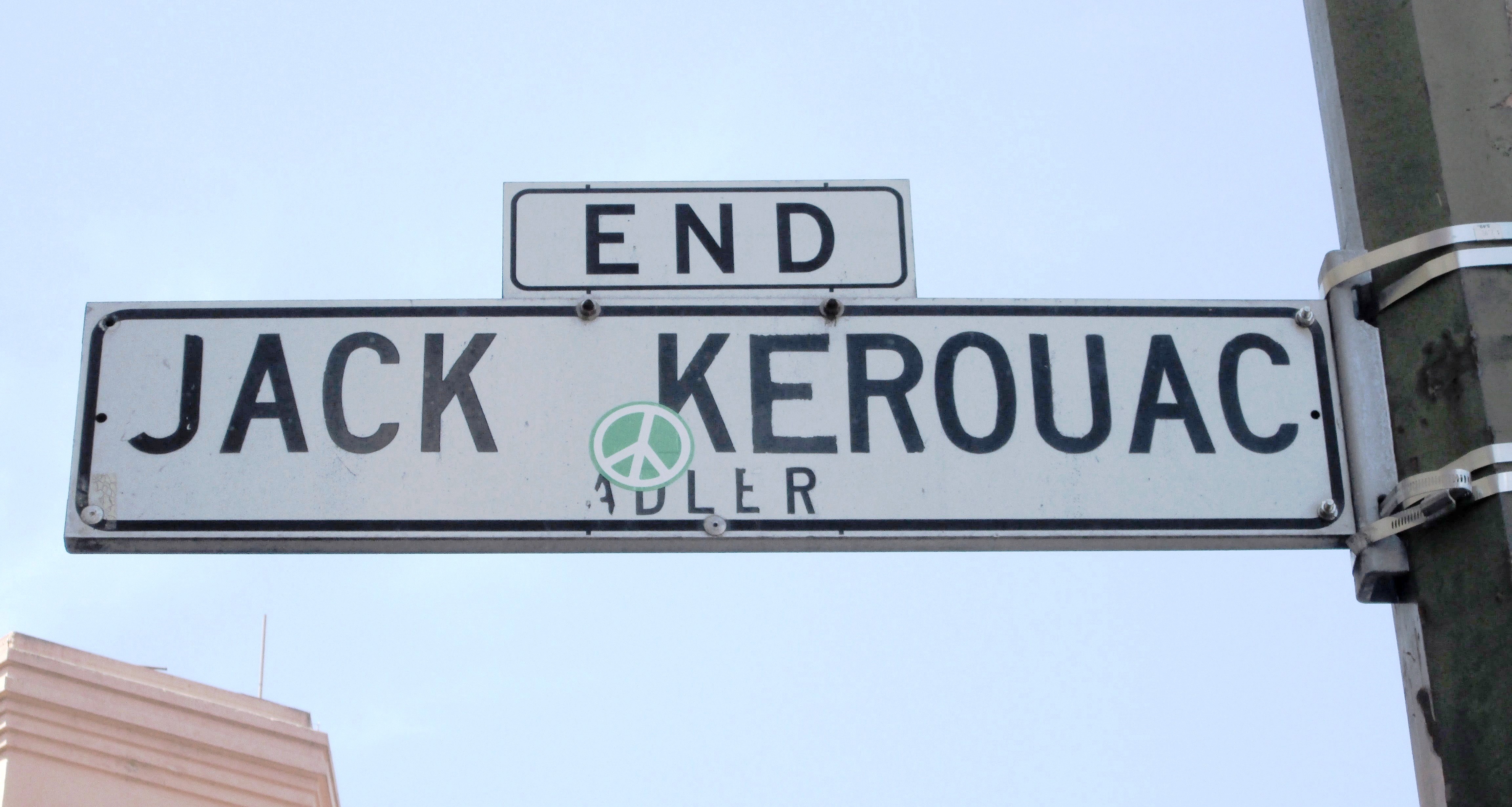
Jack Kerouac Alley, San Francisco. Photo by Beyond My Ken [CC BY-SA 4.0] via Wikimedia.


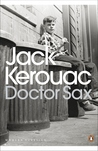
Doctor SaxDoctor Sax by Jack Kerouac

My rating: 3 of 5 stars


I finished this book and thought to myself, "What the hell was that about?" I still don't know. It is poetic in the sense that it has a distinct rhythm, not as hectic as the rhythm of On the Road, but a rhythm nonetheless. I read this book over a few days, and my dreams were haunted by visions of my childhood. Not that my childhood compares with Kerouac's, in many ways he seemed to have an enjoyable childhood with many friends. But his childhood recollections of creativity and games and imagination allow one to recall a time long past. As I read the book, I wanted it to finish as soon as possible. I couldn't stop reading it, but I wanted it to end. When it ended with:
Written in Mexico City,
Tenochtitlan,1952
Ancient Capital of Azteca
I was convinced Kerouac was completely off his nut when he wrote this work. So I looked to The Guardian and The New York Times to see what it was all about. In The Guardian, Lettie Ransley suggests that Kerouac was using what he:
...came to refer to as his "spontaneous prose" method: incantatory and insistent in its rhythms...
One can certainly feel the rhythm, much like an ebbing tide. But David Dempsey (1959) of the New York Times was closer to how I feel about the work:
"Dr. Sax" is not only bad Kerouac; it is a bad book. Much of it is in bad taste, and much more is meaningless. It runs the gamut from the incoherent to the incredible, a mishmash of avant-gardism (unreadable), autobiography (seemingly Kerouac's) and fantasy (largely psychopathic).
While I am reluctant to say it was bad, I am none the wiser as to why one might read it, other than for historical study purposes. Dempsey tells me that Truman Capote said of Dr Sax:
...this isn't writing, it's just typing.
Capote might be close to the truth, but I find it difficult to accept that the little I have read of Finnegan's Wake is somehow art while Doctor Sax is something else. So while I must appreciate it for its historical merit, and I while I have not lost anything from reading it (it has forced me to think and to recollect forgotten moments from childhood), I find it hard to say this is a good book, and I would hesitate to recommend it to anyone other than the student of literature. I enjoyed Maggie Cassidy and On the Road, but I have struggled to commit to Kerouac's Wake Up. All I can say is that after this book, I think Jack and I need a little time apart.


© 2025 Dr Michael de Percy
made with by templateszoo