Snakes on a Train: Can You Imagine?

The Light at the End of the Tunnel: A Reptilian Horror Story. Photo via Pixabay [CC0].


The Underground RailroadThe Underground Railroad by Colson Whitehead

My rating: 4 of 5 stars


I recently read Juan Gabriel Vásquez's New York Times review of this book and bought the book immediately. An actual railroad? What a re-imagining! Yet the story works. Never mind that even today, with Chinese technology capable of tunnelling vast distances at lower costs, it seemed as improbable as it was then impossible. Yet Whitehead doesn't miss a beat. Who built it? How did they build it? How did they keep it a secret? As far as the story goes, it doesn't matter. You often wish the runaways would just get back on the damn train and keep going all the way to Canada. I recall Hemingway writing about truth and good books (By-Line: Selected Journalism, pp. 188-9 but originally "Old Newsman Writes" in Esquire December 1934):
All good books are alike in that they are truer than if they had really happened and after you are finished reading one you will feel that all that happened to you and afterwards it all belongs to you; the good and the bad, the ecstasy, the remorse and sorrow, the people and the places and how the weather was. If you can give that to people, then you are a writer.
Clearly, Colson Whitehead is and has done just that.

I don't want to harp on about the plot, but rather about the use of imagination in Whitehead's writing. I have a little story I have been thinking about writing; something I saw during a previous winter that haunts me to this day. In fact, just thinking about it makes me shudder.

I put a small round log with a narrow hollow through the middle on the fire. I closed the glass door and sat watching the flames as they worked on the log. Shortly after, a small snake emerged from the hollow of the log. It extended some four inches out of the log, then shrunk back into the hollow and disappeared as if it had been pulled back in by the tail just as the log burst into flame. I imagine it was me. I am comfortable in my space, and then it gets hot. Unbearably hot. I decide to get out, but it is even hotter outside and I am trapped by glass and flames and heat and the air is sucked out of my lungs and I try to retreat and then nothing. What did the snake think? Did it feel helpless? Did it have time to think or feel? Would I?

The scene repeats over and over and I try to imagine the scenario and it makes me shudder. Could I write such a thing? Is it even a story? Maybe The Light at the End of the Tunnel: A Reptilian Horror Story.

I daresay I do not have Whitehead's gift of imagination, yet he makes a story that is not only believable, but despite its implausibility, the railroad exists as if it were true. Could I be that snake? And what the hell does that have to do with this book? But that is the point of a novel like this. What would it be like to be a slave and to exist in an implausible yet believable reality?

And that is why I like to read broadly, and sometimes without reason, or as Emerson or Oscar Wilde's Vivian (of The Decay of Lying), on a Whim. It challenges us to imagine, it makes us fill in the blanks and develop an imagery that makes the unreal real. Surely this is what Hemingway meant, and Colson Whitehead does in this haunting yet wonderful novel.


View all my reviews
Chekhov: You've gotta laugh or you'd cry!

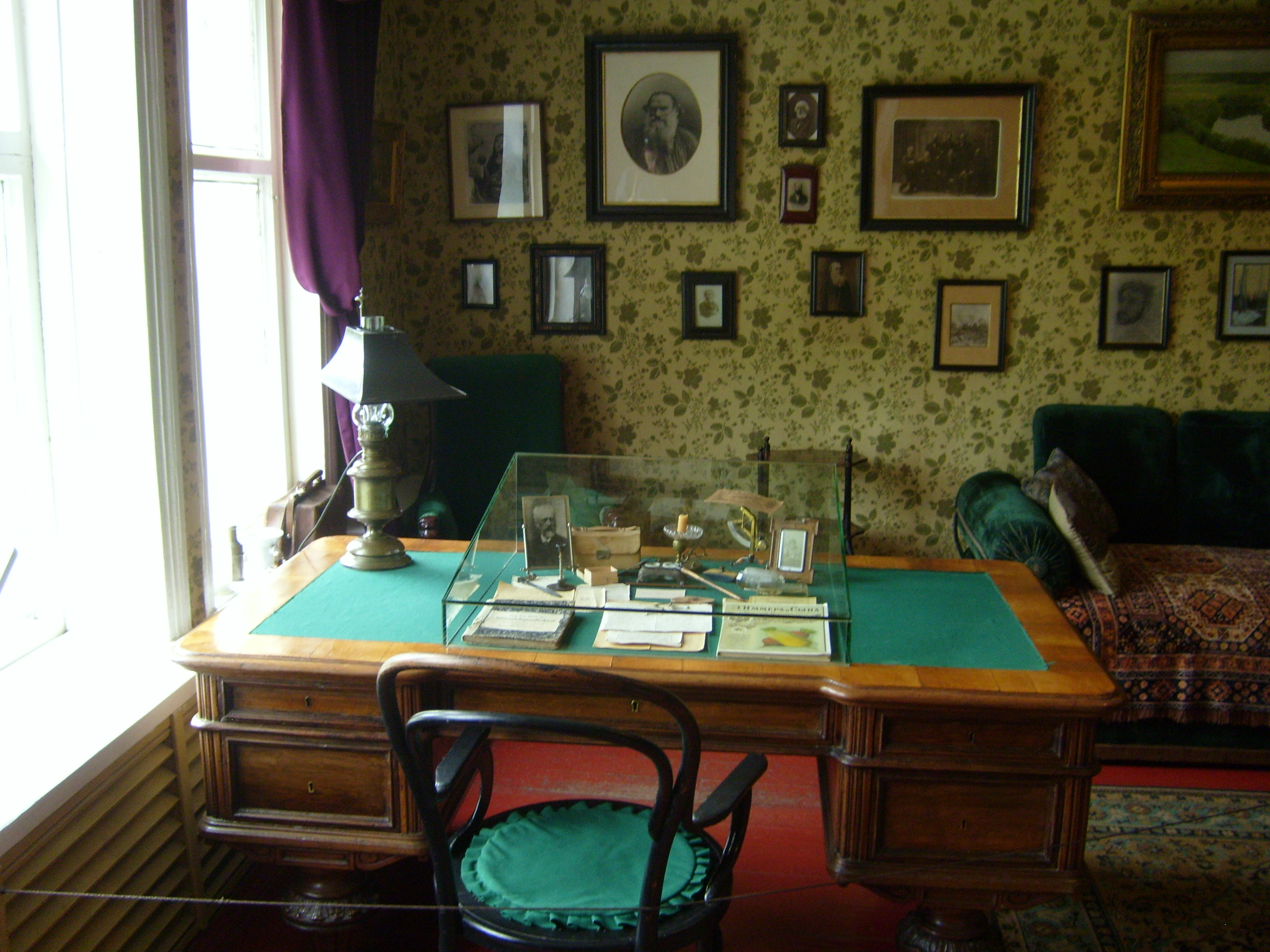
Desk of Anton Chekhov at Melikhovo estate museum. Photo taken in 2008 by SiefkinDR, CC-BY-SA 3.0 via Wikimedia.


Chekhov: The Comic StoriesChekhov: The Comic Stories by Harvey J. Pitcher

My rating: 4 of 5 stars


Chekhov is mentioned by Harold Bloom (How to Read and Why, p. 36) as one of the short story authors who had:
...achieved something like perfection in their art.
Bloom sees the lineage from Shakespeare to Turgenev to Chekhov to Hemingway, which stems from their:
...affinity with their landscape and human figures...
It is interesting that Mortimer Adler (How to Read a Book) doesn't mention Chekhov (or Turgenev), yet Bloom and Italo Calvino (Why Read the Classics, p. 185) see Chekhov as focused on:
...the relationships between the facts of existence... [and his story The Steppes was] the prototype for so much modern narrative.
I wonder if this is the result of Adler's focus on the Western canon (in its narrowest sense of the term)? The interesting thing about this particular set of short stories is its relatively recent translation into English, and its focus on comedy. Calvino mentions The Steppes, while Bloom mentions several other stories, none of which appear in this collection. So there is more reading of Chekhov for me to do. Yet this collection is funny.

I wondered whether Oscar Wilde had anything to say about Chekhov. Surprisingly, it was Stephen Fry (who played Oscar Wilde in the 1997 movie Wilde) who puts the two together in an interesting way. Fry writes:
Chekhov is probably better known in Britain for his plays than for his prose. For many, however, it was his short stories that mark the high water of his genius. It might at first glance be hard for those not used to his style of narrative to see what the fuss is about (and fuss there is: for most authors and lovers of literature Chekhov is incomparably the greatest short story writer there ever was): these tales appear to be about nothing.
Fry also says (and I quote at length):
Anton Chekhov is a case in point. Grim. Russian. Gloomy. Stark. Bleak. Melancholic. Sorrowful. Suicidal. Tragic. Well, I’ll give you Russian. He was that all right. As for the rest. Grim? Chekhov? Bleak? No, no. Chekhov was the foremost comic artist of his age. If by comic we mean something more than slapstick, farce or revue. There are satirists, like Swift, who cannot hide the fact that they believe humanity in all its forms from the grandest king to the lowliest serf to be nothing short of pathetic, ludicrous and disgusting; there are others, like Chekhov who find it just as hard to conceal their sympathy, kinship and fellow feeling.
Having read almost all of Hemingway's short stories, Turgenev's Sketches from a Hunter's Album, and Guy de Maupassant's A Parisian Affair, I see similar assumptions of human nature, and indeed a similar philosophy and aesthetic with Chekhov picking up from where Turgenev (channelling Shakespeare) left off. Whether I could put this correctly in a theory-of-literature perspective is another thing, but certainly the brilliance is obvious. 

Some of Chekhov's stories could easily be adapted to the social life of Canberra, Australia's capital, and its concentration of public servants. Maybe less so now, but certainly in the 1990s and early 2000s. And stories of musicians, doctors, and emerging technologies (such as the telephone) retain their humour despite more than a century's passing. 

The test of good literary work is its ability to stretch beyond ephemera. Chekhov achieves this, and his sense of humour is not lost on a contemporary audience.


View all my reviews

Oscar Wilde on Contradiction: Learning Unintended Lessons Through Art

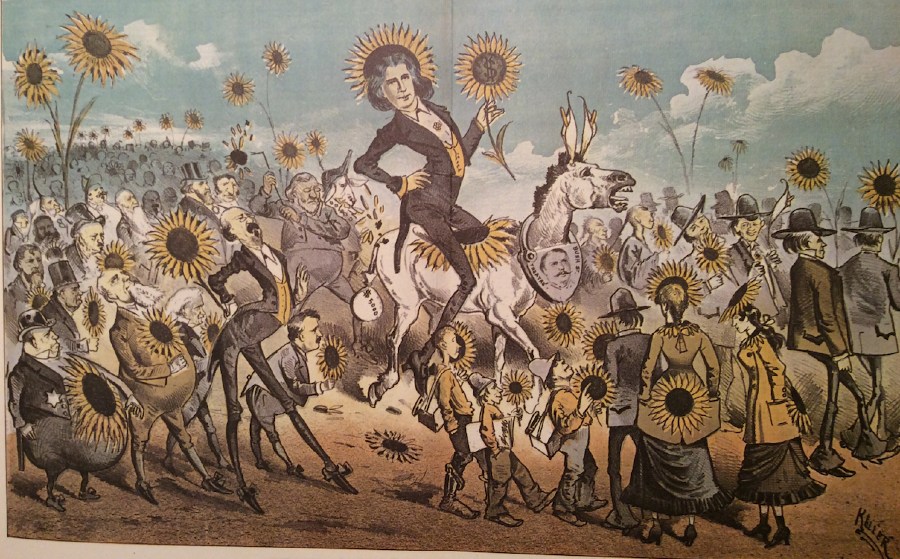
Cartoon depicting Oscar Wilde's 1882 visit to San Francisco, from The Wasp, 31 March 1882. Public Domain via Wikimedia.


Intentions: The Decay of Lying, Pen, Pencil and Poison, the Critic as Artist, the Truth of MasksIntentions: The Decay of Lying, Pen, Pencil and Poison, the Critic as Artist, the Truth of Masks by Oscar Wilde

My rating: 5 of 5 stars


This collection of dialogues and essays demonstrates Oscar Wilde's aesthetic, but also his vast knowledge of the classics, Shakespeare, and other great things in nineteenth-century Anglo art, literature, architecture, and theatre. Three pages into The Decay of Lying and one has been exposed to Aristotle, William Morris, and Ralph Waldo Emerson. He uses a form of the "iceberg" principle (later perfected by Hemingway) that demonstrates his knowledge without appearing to be name dropping. It is one thing to mention Aristotle, Morris, and Emerson as part of Vivian's critique of nature; quite another to append one's own aesthetic to the name dropping that leaves no doubt as to the author's learning. For instance, William Morris once said:
Have nothing in your houses that you do not know to be useful or believe to be beautiful.
Wilde, in discussing nature versus art, mentions Aristotle (p. 3):
Nature has good intentions, of course, but as Aristotle once said, she cannot carry them out.
Vivian is discussing his preference for the indoors, and says (p. 4):
Why, even Morris' poorest workman could make you a more comfortable seat then the whole of Nature can... If Nature had been comfortable, mankind would never have invented architecture, and I prefer houses to open air.
This first part of the introduction is then neatly wrapped up with reference to Vivian (p. 5) writing the word "Whim" over the door of his library, echoing Emerson doing similar in his famous essay Self-Reliance. What does this all mean? It sets out several themes that thread through these five dialogues and essays. First is the interaction of art and nature in the human spirit. Second is contradiction. Vivian doesn't want to go outside, until he does. Vivian thinks writing is a waste of effort. But he is writing an article. In the final paragraph of the collection, Wilde writes:
Not that I agree with everything I have said in this essay. There is much with which I entirely disagree. The essay simply represents an artistic standpoint, and in aesthetic criticism, attitude is everything. For in art there is no such thing as a universal truth. A Truth in art is that whose contradictory is also true.
Third is the rhythm of life and the pursuit of human excellence. Wilde's characters in the dialogues go from contradictory point to contradictory point. In the essays we learn how ill-discipline and ignoring our intuition can lead to trouble (for instance, the poisoner leaves his ground-floor curtain open and is instantly recognised from the street); how Shakespeare used architecture and costume to make a point (as opposed to the theatrical archaeologists who point out Shakespeare's character's anachronistic raiment); how one moment we are focused, the next bored, even depressed, but we can be humorous, witty, intelligent, and dull. The dialogues read like a moment of intense thought that begins out of boredom and ends in boredom with thought. An indoor conversation is the scene of energy, but after talking "long enough", the outdoors beckons:
Egotism itself, which is so necessary to a proper sense of human dignity, is entirely the result of indoor life.
It is unsurprising that Oscar Wilde is so well-read and witty. After all, he was a graduate of Oxford at a time when only the elite or those with elite patronage could dream of studying there. Yet there is an intense use of Plato's form of dialogue, an interesting blend of self-reliance and pompousness, intensity appearing indoors (even within Shakespeare's Globe Theatre), and the outdoors being a place of leisure (for the well-to-do, at least!). Yet the point of contradiction is not to be dishonest, but, through art, to bring to Nature the human experience:
The final revelation is that Lying, the telling of beautiful untrue things, is the proper aim of Art.
I recall in high school, when studying English literature, the teacher would ask: "What does the author mean by this or that?" to which I would say, "How should I know? And how do you know if you didn't ask them?" Logical to an egotistical teenager, to be sure, but hardly intelligent. And now? It would take several re-readings of these dialogues and essays and some intense study into Wilde's life at the point in time of writing these works to discover more. Yet, armed with the knowledge of reading given to me by Harold Bloom, Mortimer Adler, Italo Calvino, and Theodore Roosevelt (to name but a few), I think I can safely tell my teenage self that, contradictory to what I thought then, one can interpret and learn from the writings of others, even if the lessons learnt were never intended. And if Art cannot deliver such lessons, what other medium can?


View all my reviews
© 2025 Dr Michael de Percy
made with by templateszoo