RSS and Podcast Renaissance: Tom Kantor, Pulsar Music, and Rail Dynamics


The AK-47 of Phones and Dodo Birds

I remember buying the Nokia 6210 WAP phone for a cool $800 back in the early 2000s. Bob Geldof called it the AK-47 of phones and was still using one in 2014. WAP was hopeless. it was a complete waste of time and money. While I am pleased 'Sir' Bob got his money's worth, I really thought that RSS and podcasts were in a museum of popular culture somewhere as a reminder of the olden days.

I remember iPodder. It never worked. Not once. Then just a little while ago, RSS and podcasts were back! So here's a little story about the Renaissance of RSS and podcasts, and some interesting discoveries I made using these old school tools.

The Renaissance of Really Simple Syndication (or Rich Site Summary for purists)

I often commute for up to two hours per day, and this has opened up the whole old world of podcasts, which has opened up a whole old world of RSS. I say old world because I thought RSS and podcasting would have gone the way of the WAP phone by now. But no, RSS and podcasts are experiencing a renaissance.

I used RSS years ago and I had almost forgotten about it until I listened to a podcast. Good old Feedly was recommended, so back I went. I have dropped out of social media several times (except this blog), and each time I rationalise all the apps and social media sites I use, and Feedly (along with iPodder, which is now Juice) was an early casualty. 

One of the things I have been doing unsuccessfully is subscribing to a number of websites. But my personal email ends up as a stack of unread emails about things I might be interested in but rarely get the chance to read unless I print them out or let them sit in the inbox or open on tab in my browser for an eternity.

When Twitter first came out (I was an avid user back then, not so much now it is over-run by trad media. Twitter has been a casualty of rationalisation several times), I remember the discussions about how it was a stream, like a river where everything floated past and you might look at things of interest, but if you missed it and it wasn't popular, then c'est la vie.

Email is like a dam - it fills up and fills up until it either explodes or you have to open the flood gates and let the stored energy disappear in a rush. Either way, you miss out on things. C'est la vie.

So Feedly it is. I find myself unsubscribing to all the email subscriptions that clutter up my inbox and I daresay I miss out on more than I do using the RSS aggregator. When I unsubscribe, I am providing feedback to say that I am still following on RSS. 

Occasionally, I find websites that I want to follow but there is no ready RSS feed. They are stuck in the Middle Ages I guess.

So now I subscribe to various RSS feeds through Feedly. I simply search for what I want, delete what I don't. For example, if it has 'Trump' in the title it gets deleted. Instantly. It makes no difference to my current affairs knowledge and I stay remarkably happier. 

Not because I care about Trump. I just don't care about Trump. Whenever anyone says they are a world beater, I say let them have a go. They all go the way of the WAP phone. I don't need to read about it every second of my short life.

Occasionally, I stumble upon really interesting things. The video made by Tom Kantor at the top of this page is one example. Filmmaker Tom Kantor, died too young, son of philanthropist Anne Kantor, sister of Rupert Murdoch; Tom's sister runs the Poola Charitable Foundation.

The film is haunting. It provides the sounds of my childhood. A sound so familiar I pretend to cringe in case anybody notices. And the haunting scenes of familiar brands and that empty landscape, always present, unpaved, the new discarded upon the ancient. The rich kid who went to Swinburne TAFE, and they who have unknowingly educated angels. Brilliant.

Podcasts are great. And I am learning so much I simply must use them in my teaching

For listening to podcasts, I find Stitcher suits me best. I was thinking of using Stitcher for my own podcasts, but I cannot seem to login to their content provider portal and they aren't answering my emails, so maybe not. But for now, Stitcher will do.

My favourite podcasts are Art of Manliness and Lapham's Quarterly. But the more I commute, the more I burn through the episodes. Some times there just aren't enough.

Last week I stumbled upon the Smithsonian Institution's podcast "Sidedoor". It's great. Here are two of great discoveries:

Pulsar Sound: An app that makes music out of the stars. Turn the app on, point your phone at the sky, and it makes music based on the frequencies emanating from pulsars. Or something like that. Bet that won't work on your AK-47, Sir Bob.

Rail Dynamics: Emory Cook basically created Hi-Fi. That's not a typo. And he is most famous for his cult hit record, Rail Dynamics. This is a bunch of recordings of steam trains. I can listen to it while I read and write, much like my other favourite composer, John Adams. It is like a naked Pink Floyd album. Just brilliant.

And to top it all off, I found some new music, while trying to put together my first podcast, I stumbled upon some new music. A Russian band, Stoner Train, with a Russian, blues throcalist. Now I have heard it all. And the cover depicts a train, so it's on theme, too.


Utilitarianism

John Stuart Mill (c. 1870).


UtilitarianismUtilitarianism by John Stuart Mill

My rating: 5 of 5 stars


The trouble with Mill is that you if read a few of his then-contemporary critics, and then you think you have his measure with all your modern day access to knowledge, but all along he was throwing "mind grenades" set on "delay" and they sit in your head while you go on thinking you are rather smart. So Mill mentions the Stoics and how virtue is only a means to happiness and that there are other things, too. He mentions the Sophists and how Socrates (allegedly) challenged their ancient equivalent of what is happening in higher education today. But in mentioning the development of utilitarianism from Epicurus to Bentham (and unfortunately I have not read Bentham cover-to-cover as I will do in the future), so just when I think to myself: "Mill, you really are 'drawing a long bow here' [a favourite saying of one of my favourite professors]", the mind grenade goes off and my hubris is dashed and I am glad I didn't say it out loud but there you have it - it was certainly there. There is no mention of Aristotle and the "golden mean" and how achieving a mean across the spectrum of virtues achieves happiness, but, as Mill says, there are many things that amount to happiness in addition to leading a virtuous life, so bringing up Aristotle doesn't make a good deal of sense. One interesting aspect of the essay is the long note in the last few pages where Mill extends a good deal of courtesy to Herbert Spencer, someone I have read more about in Jack London's Martin Eden than I ever did in all the other secondary sources I have read put together. While Mill does not quite agree with Spencer, Spencer claims (according to Mill) that he was never against the doctrine of utilitarianism. So the Greatest Happiness Principle it is but if we do not also take into account Mill's ideas of liberty (in On Liberty), then the present-day situation where we are told what to like and what will make us happy and many of us go along with that and eat our smashed avocado, living in our high density housing, and paying for cups of coffee that we could make at home for a fraction of the price, which are not only much better, but we could also be happier because we were actually doing something for ourselves, while, as Tolstoy or even my mother would say, "in reality", we are succumbing to the biggest scam ever and then wondering why we are not happy at all. And J.S. Mill says all this in just under 122 pages of thick paper dating from 1895, which is nice, but with each cover-to-cover completion of classic works I edge ever-closer to the abyss of what I don't know and it scares me.


View all my reviews

Left-Right; Right-Left: How about a fourth revolution?

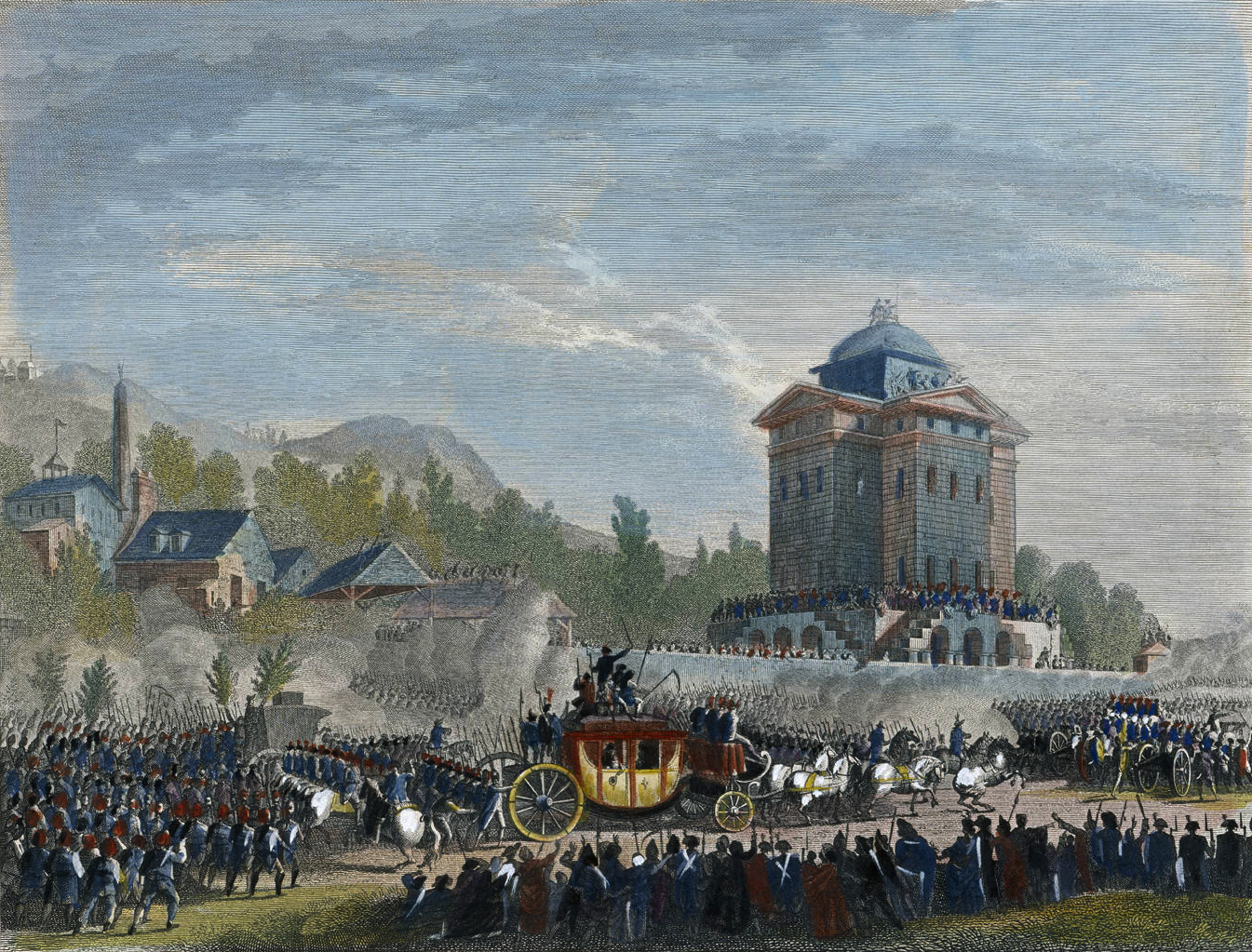
The state triumphant? Jean Duplessis-Bertaux's "Retour de Varennes. Arrivée de Louis Seize à Paris, le 25 juin 1791" (1791) via Wikimedia.


Today I read respected economist John Quiggin's latest in "Governments are buying up where the market has failed. Is this the end of privatisation?" via the TJ Ryan Foundation website.  Apparently, privatisation has failed because the government decided to start buying back infrastructure. Given the article appeared in The Guardian, you will excuse me for being a little sceptical about this trumpeting of the state's triumphant return to delivering services.

Poor regulation is not the fault of businesses. Indeed, there are some major problems that government brought about all by itself: forgetting to structurally separate Telstra before selling it off, then wanting to buy part of it back through NBN, and let's not forget the roof insulation debacle

None of these problems were caused by market failure. Clearly, these were government failures. Political reactions that buy back the farm are about winning elections and little else. It is a far cry from a failure of the free market.

Not that Quiggin says all of these things, but he does seem to be against privatisation. But being against privatisation, where government sells the farm and then promises to irrigate it and weed it and harvest it and then give all the proceeds to the private sector, is not the same thing as market failure.

Market failure occurs where the private sector is unable to provide goods and services at a profit. Broadband services to remote communities is a case in point.

But this is where ideology comes in. Rather than funding, transparently and directly, the actual cost of services to remote communities, it must be cross-subsidised. This means that the true cost of providing to the bush is hidden, and the costs of inefficiencies are buried in monoliths like NBN Co.

And while Quiggin acknowledges that this is not a return to socialism (or, more appropriately, social democracy), given that land titles offices are to be leased out (NSW) or sold (SA), it is largely a return to nationalisation of particular industries. This has happened time and again in the UK, Australia, and Canada, and so on with telegraphs and railways and other services, especially during war time. (There is even talk of the ACT Government buying back Canberra Stadium so it can bulldoze it to the ground and then build its own stadium - again - in Civic. But remember the original debacle that was Bruce Stadium?)

Quiggin notes that Pauline Hanson is using citizens' dissatisfaction with the private sector (which governments get blamed for anyway) and combining this with racism - a form of left-right politics where public ownership is combined with right-wing social policies.

The Hawke government, which introduced the majority of the reforms based on economic liberalism (or economic rationalism as it was known here), had more of a right-left agenda. Since Howard, we seem to be stuck in a race to the conservative right, or centre-conservative/right2 ideology - the biggest government in history, pretending to be a small government, touting freedom while taking away the rights and freedoms of citizens more than ever.  

I made a joke to my class the other day about living in Australia versus living in the developing world. In many developing world countries, you can do whatever you like as long as you do not criticise the government, In Australia, you can criticise the government all you like but you are not allowed to do anything.

What has never been tried is a liberal-liberal approach. Imagine a free market with same-sex marriage, free trade agreements with universal health care and education, market competition for goods and services in the metropolitan areas and government-provided services in the frontier areas.

The trouble is not privatisation, but a half-baked attempt at it. And it isn't the same thing as libertarianism a la Ron Paul. Regulations are necessary. But should the government really have anything to do with holding back same-sex marriage? This has nothing to do with government.

But before we think that re-nationalisation is a new turn in politics, don't forget Kevin Rudd's essay in The Monthly on the Global Financial Crisis back in 2009. Choosing one economic orthodoxy over another is all history has witnessed since before the Great Depression.

Re-nationalising has been done before, and it will be done again. And it will be undone again, too. But what is missing is not the right economic policy, it is the right combination of economic AND social policies. Why liberal economics can't work with liberal social policy we may not know until it has been attempted. And whether this can produce better results than China's emerging model is another story.

While much of the above is a stream of thought, I have a few ideas of what to do about it. First, I might follow up on a recent Lapham's Quarterly podcast where John Micklethwait talks about his co-authored book (with Adrian Wooldridge) The Fourth Revolution: The Global Race to Reinvent the State. (Lapham's Quarterly is the magazine I have always longed for, and Lewis Lapham is like the Mortimer and Adler of "Great Podcasts". If you don't subscribe yet and you are into politics or history, then this is the duck's!)

Second, I need to consider rating policy decision such as Snowy 2.0, NBN, electricity, South Australia's great big Elon Musk battery, and so on, and putting together a quantitative paper. Some of Patrick Dunleavy's recent work might serve as an example.

But why oh why we can't have liberal economics and liberal social policy I will never know. And while I don't even pretend to have the temerity to critique Quiggin's views, I think there is something to be said for the paradigms that continue to wax and wane in the economy and society. 

That this all began in 1776 with Adam Smith's Wealth of Nations, in his argument for market liberalism, together with the United States Declaration of Independence, also from 1776, and its focus on political "liberty", provides an interesting starting point for an historical argument about the never-quite-coming together of these two ideals: liberty-liberty.
Note: See also William Hogeland's (2017) Autumn of the Black Snake: The Creation of the U.S. Army and the Invasion That Opened the West via Lapham's Quarterly.
© 2025 Dr Michael de Percy
made with by templateszoo