Utopia

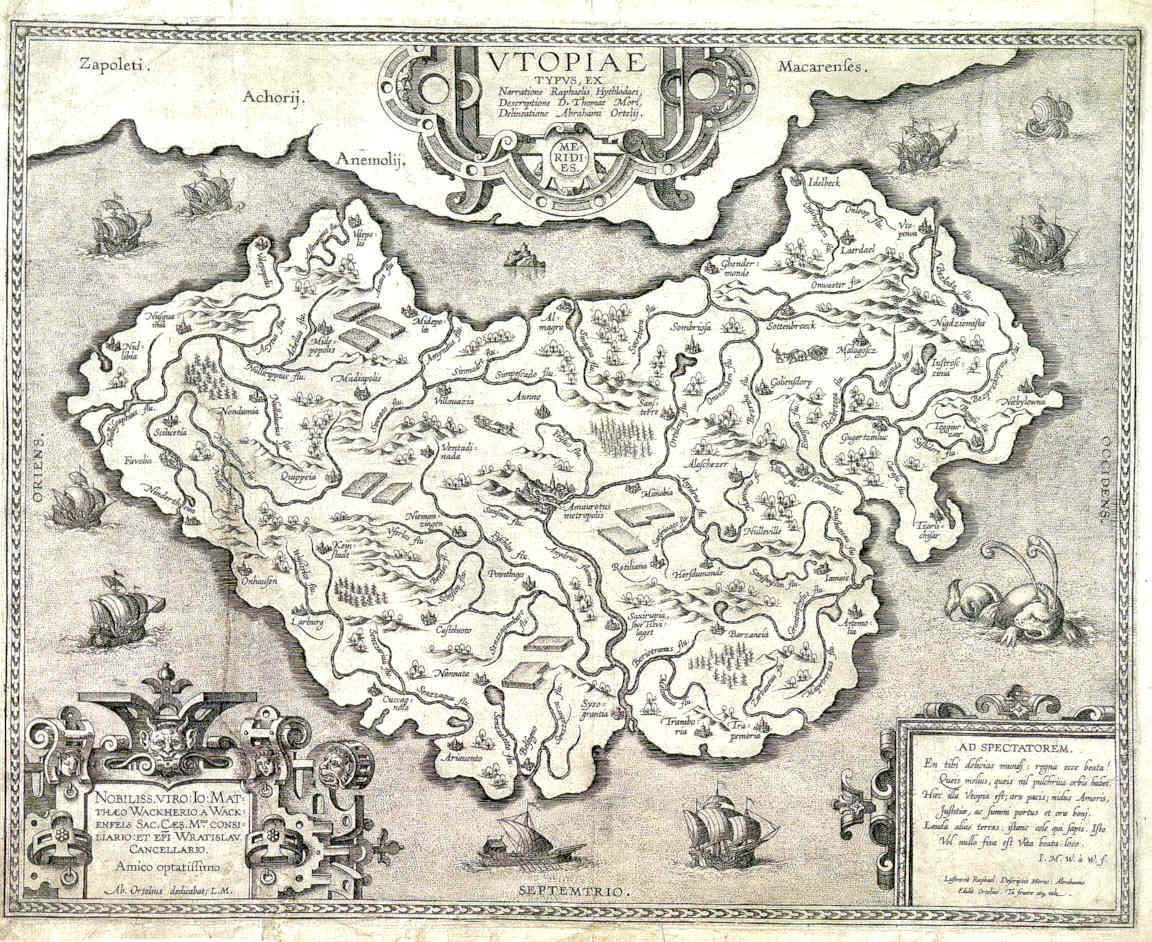
 Abraham Ortelius' Map of Utopia (1595) via Wikimedia


UtopiaUtopia by Thomas More

My rating: 3 of 5 stars


Yet another of the books for which I could provide a synopsis but have never read cover to cover (until now). There is much to Sir Thomas More's communist (note my use of a lowercase "c") essay that surprised me. One can see the little twists to insure against More being burned at the stake (the Utopians were ready to receive Christ as they had more or less self-discovered Christ's communal teachings - but it didn't prevent him having his head cut off for refusing to succumb to its antithesis) along with it being presented in the form of a dialogue in Book I (as per Plato, Machiavelli, et al.). A few things made me think it might be more socialist than communist, if one accepts that communism attempts to abolish the state in order to achieve equality, whereas socialism aspires to the same aim but through governmental or formal institutional arrangements. The founder of Utopia, "King" Utopus, suggested the limitations of More's imagination, and had me thinking of modern Bhutan. But the notes on the translation point out that Ralph Robinson, the translator, had added his own interpretations of the original Latin that added kings and princes where none was intended. The introduction by Richard Manus explains the reasons for keeping the original translation and for that I was pleased. The focus on religion and the idea of bondsman doing all the unpalatable work for the commonwealth brings to the fore many of the problems of communism in it twentieth century practice. Aside from the obvious problems where the dictatorship of the proletariat has never ended in its practical forms, communism has never really obtained that level of freedom, particularly in terms of occupations or individuals becoming "Renaissance" men or women, whereas, and despite its reliance on the "Metroplesque" underground to make it practicable, this is achieved, along with a six-hour work day, in Utopia. The interesting use of mercenaries in warfare and foreign relations and the stigmas attached to precious metals and pearls (for bondsmen and children respectively) point to the absurdity of surviving ideas about value and money. The use of Plato suggests a reinvention of the Commonwealth of centuries before, whereas Jonathan Swift, too, draws on the folk tradition to protect himself from his own political commentary, albeit over a century later, but relying on similarly strange peoples with startlingly homogeneous cultures. But, taken in its times, More seems to have done a good deal of the theorising for Marx to arrive and merely iron out the shortcomings. Despite my familiarity with the work, there is much fruit to be harvested by taking the time to read thoroughly what one has previously learnt second-hand. Yet I am pleased that our education system is remarkable in that, despite its secondary-source nature, the synopses I (at least) have received are true to form, if otherwise lacking in detail.


View all my reviews
The Communist Manifesto

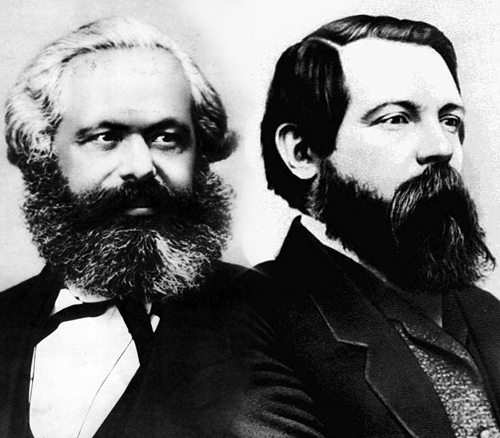
Karl Marx and Friedrich Engels via Wikimedia.


The Communist ManifestoThe Communist Manifesto by Karl Marx

My rating: 5 of 5 stars


How does one rate a classic? If one could only change the world in 30 pages or so! What always strikes me is that, much like Dr John Hewson's Fightback! policy from the early 1990s, most of the pamphlet has been implemented already (sans the revolution, and admittedly Hewson's work was considerably longer at 650 pages!). Nevertheless, of the ten "measures" (p. 20), Australia has, over time, implemented many of the plans through what, in some ways, still displays remnants of social democracy. However, as with Fightback!, and while many like to think it was all nonsense, much of it has been done or is still in the doing. Whether the great Internationale will die with the contemporary return to nationalism is a moot point when one considers the exponential increase in growth and power of "socialism with Chinese characteristics" (not to mention India, which is quite another story). But this probably won't concern me, at least in this life.


View all my reviews

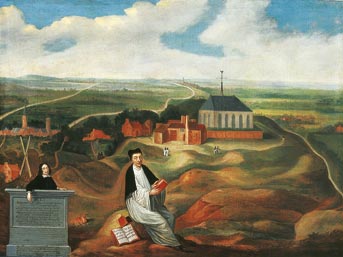
The Inner Life

Thomas a Kempis on Mount Agnes (c. 17th Century) via Wikimedia.


The Inner LifeThe Inner Life by Thomas à Kempis

My rating: 3 of 5 stars


Penguin's Great Ideas series showcases important works in an abbreviated format (not my favourite way to read), and this work by Thomas à Kempis is drawn from the larger work The Imitation of Christ. After reading Benjamin Franklin (see his 13-week virtues program in The Autobiography of Benjamin Franklin), Albert Camus, and James Allen, I can see the connections to this work dating from the early fifteenth century. There are also elements of Stoicism, recalling Marcus Aurelius. For example, on death at p. 20:
If you are not ready to die today, will tomorrow find you better prepared?
And of being in the world, especially when one is distracted by others, on p. 28:
But to be able to live at peace among hard, obstinate, and undisciplined people and those who oppose us, is a great grace, and a most commendable and manly achievement... He who knows the secret of endurance will enjoy the greatest peace. Such a one is a conqueror of self, master of the world, a friend of Christ, and an heir of Heaven.
Here, James Allen's meditations shine through and it is pleasing to read these in the original. Having said that, there are times when the dialogue between Christ and the disciple, I suppose borrowing from Plato, irked me a little. Nevertheless, there is one part where, and I say this without having researched others' views on the matter, but in Chapter 2 of Book 3 (pp. 40-41), entitled How Truth Instructs us in Silence, the disciple raves on and on and never lets God put a word in edge-wise. This reminded me of Franklin's second virtue, silence, and how we tend to talk too much. I wonder if this was a precursor to the style of La Rochefoucauld? It certainly had me yelling at the disciple to just shut up and listen! Finally, Franklin's thirteenth virtue, to be like Jesus or Socrates, might make the reading of the complete book worthwhile. This is the most difficult of the virtues to comprehend. My reading of Kempis suggests that to think ourselves capable of imitating Christ is folly, and as a non-Christian, even emulating Socrates is egotistical, especially if one were to self-assess as anything other than a black mark for each day for not having been able to be so. Again, without looking to others, what I have gained from Kempis is not that we can imitate Christ (or Socrates, for that matter), but that we can only strive for the ideal. In self-assessing against Franklin's thirteenth virtue, I can only ever give myself a perforated black mark, as I could never say I had reached such levels of perfection (some suggest that Socrates belongs to the list of Abrahamic prophets, so he may well be out of reach, too). And yet the struggle over this one problem is exactly what Kempis suggests we do. Herein lies the genius of Franklin. In assessing himself every day for thirteen weeks, I doubt he could ever not give himself a black mark; yet every day he was reminded to strive for the ideal, no matter how imperfect a man may be in (as opposed to "of"), the world.


View all my reviews
© 2025 Dr Michael de Percy
made with by templateszoo