The Politics of Road Reform: The challenges ahead for road pricing and provision


Our book, De Percy, M. and Wanna, J. (2018). Road Pricing and Provision: Changed Traffic Conditions Ahead. Canberra: ANU Press, was officially launched by Chartered Institute of Logistics and Transport Australia (CILTA) Fellow and Director-General of Transport Canberra and City Services Emma Thomas at a CILTA event held in Canberra today.

At the launch, I gave a presentation on the politics of road reform, looking at the challenges ahead for a road pricing regime that will hopefully replace the existing motor vehicle registration charges and fuel excise. Such changes are viewed as inevitable in the developed world, where fuel efficiency and the advent of electric and autonomous vehicles are impacting upon road-related revenues and where traditional approaches to road use and provision are unsustainable.

My view is that a road pricing system in Australia will need to be introduced in conjunction with GST reform to replace the existing state-based revenue streams. This is necessary from a variety of perspectives, including broad revenue reform, to reduce congestion, and to reflect more accurately motorists' use of the road network.

An objective look at the facts and figures will lead the independent observer to the view that a 'do-nothing' approach will impact upon productivity and ultimately the standard of living. An integrated transport pricing system will remove the existing cross-subsidisation and create a more transparent, market-based system. But leadership from the federal government will be a major factor in any reform initiative.

It is not about if, but when we should act. While commuter attitudes are one hurdle, anyone who has driven in peak hour traffic in Sydney or Melbourne will know that the present system is unsustainable. But the broader issue of GST reform will be challenging. Any system change will require bipartisanship and a broad federal-state mandate for action.

Who will act first? Any road reform initiative will provide numerous opportunities for political scare campaigns. But can we afford another 'GST birthday cake'? It is worth reflecting upon this the next time you are stuck in traffic.

The University of Canberra's press release on the event is available here.


Photo by Alex Proimos from Sydney, Australia (Sydney City Traffic) [CC BY 2.0] via Wikimedia.


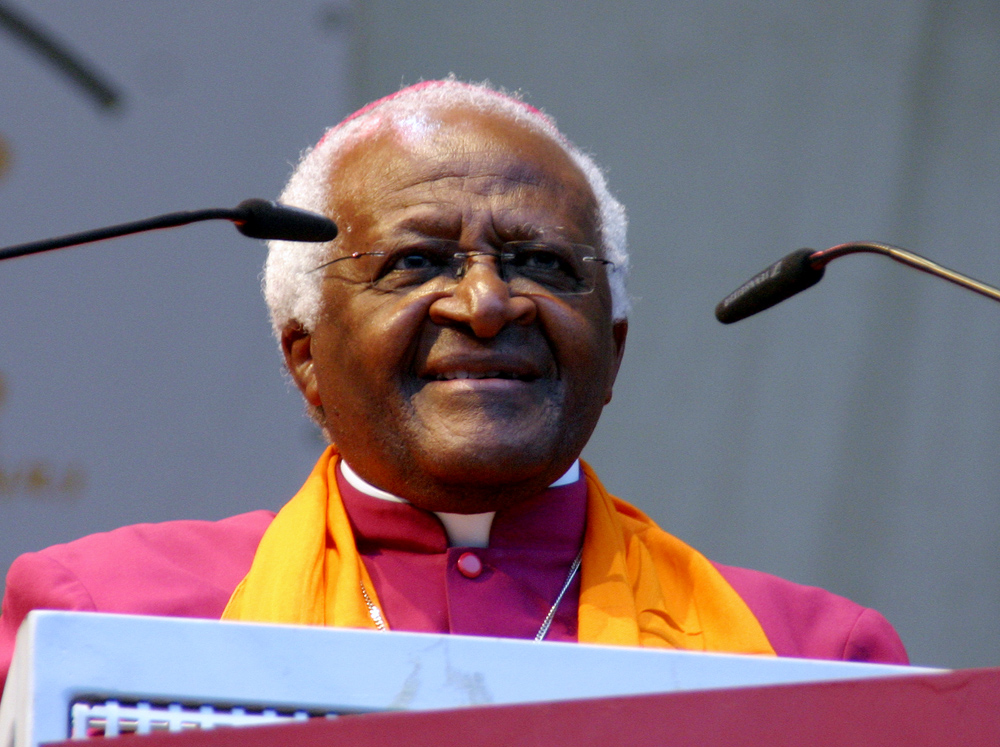
The Wit and Wisdom of Desmond Tutu

Desmond Tutu. Photo by Elke Wetzig (Elya) [CC-BY-SA-3.0] via Wikimedia.


Believe: The words and inspiration of Desmond TutuBelieve: The words and inspiration of Desmond Tutu by Desmond Tutu

My rating: 3 of 5 stars


This short book includes an introduction by Desmond Tutu and a short biographical essay by Mike Nicol. The quotes are interesting and inspiring. It is a little like the Dover Wit and Wisdom series of books, although somewhat shorter. The most interesting quote concerns Ubuntu, "a central tenet of African philosophy:
A person is a person through other persons.
Many great thinkers influence these quotes, including Epictetus, Marcus Aurelius, Jeremy Bentham,. John Stuart Mill, and George Santayana. But my favourite quote (which echoes Mill) is:
Differences are not intended to separate or alienate. We are different precisely in order to realise our need of one another.
Although this is a very short book, I am glad I picked it up at my local second-hand bookstore and it has taught me a little about Desmond Tutu and courage and compassion in the face of terrible oppression.


View all my reviews


World and Town: A gem that I was compelled to go back and buy

The author, Gish Jen, 2010. [CC BY SA 3.0] via Wikimedia.

World and TownWorld and Town by Gish Jen

My rating: 5 of 5 stars


This book caught my eye at the bookstore but I bought Ha Jin's Waiting instead. Soon after I regretted not buying World and Town and I was compelled to go back to the bookstore and buy it. I am glad I did. 

I usually find it difficult to give five stars to modern literature because I often find the classics so much better. Will this be a classic? I don't think so, but it might just be one of those long-lost gems in years to come. 

This novel covers so much ground yet brings it together so well. It is a book of contrasts. Old age, youth. Children, death. Multiculturalism but from so many angles. Chinese history. Cambodian history. Vietnam veterans, the disintegration of the family farm, the end of long-term marriages, foster homes. Religion - Christianity, Buddhism, Confucianism, burial, suicide, ethnic gangs, multilingualism, academia, science versus religion, religion versus science, pets, old love, new love. Kids who say "like" in the middle of every sentence, small town life, emails from home to the diaspora (like letters that form part of the dialogue in earlier novels), music, farming, hippies. 

In many ways it presents a version of the United States as it is rather than as it is imagined by some (I can only guess, but it resonates with the realities of Australia's cultural diversity). And it all concentrates on a small town in the north. I wondered if Hattie, the protagonist, would start to bore me. She just seemed so old. I think of Scott Fitzgerald who said nobody wants to read about poor people. 

But Hattie is so complex, so interesting. She is nosy, an artist, a scientist, a teacher, lonely. Yet she has a drive and a sense of self-discovery that makes you forget she is an old retired Chinese-American widow living in a small town. The connections with the rest of the world, the different ideas of filial responsibility, of God's work versus the manipulation of churches that prey (not pray!) on the vulnerable. 

The book even mentions the idea of "third culture kids" (something I have only ever read about in academia). It taught me a few things about adaptability and change, too (p. 232):
Even pigeons try to connect what they do with what happens to them. Really, they have no control. But they're wired to try anyway. They have a connection bias, just like people - a tendency to look for cause and effect, whether it's there or not.
Did you know that "Houdini had a tool pocket in the lining of his mouth"? I didn't. Now I have to find out if it's true. Do you know (p. 246):

...what it meant to have had our structures adapted and readapted, but never fundamentally redesigned[?]
I didn't. I don't know whether to call this a lovely story or an inspiring yet realistic tale. But I did love the book and I look forward to reading some more of Gish Jen's work. In an era of xenophobic nonsense, this novel sheds some light on what the world is like beneath the veneer of how things used to be.


View all my reviews


© 2025 Dr Michael de Percy
made with by templateszoo