Rilke: Is it better to choose one's career carefully, or to know oneself through trial and error?

Monument to the poet Rainer M. Rilke in the city of Ronda, Spain. In the gardens of hotel Reina Victoria.
Photo by Wwal [Public domain] via Wikimedia


Letters to a Young PoetLetters to a Young Poet by Rainer Maria Rilke

My rating: 4 of 5 stars


Rilke wrote a series of letters to the young poet, Franz Xaver Kappus, beginning in 1902. Kappus was reading Rilke's poetry under the chestnut tress at the Military Academy in Wiener Nuestadt when his teacher, Horaček, noticed the volume. Rilke had been a pupil at the Military Lower School in Sankt Pölten when Horaček was a chaplain there, and Horaček had known Rilke personally. 

The military proved not to be for Rilke, and he continued his studies in Prague. Kappus, however, felt that his own choice to pursue a military career was "directly opposed to my own inclinations", yet would continue his military career for years after. In the meantime, Kappus decided to write to Rilke to ask for feedback on his own poetry, and Rilke maintained their correspondence despite his constant travels. 

By Rilke's tone in the letters, it is obvious that he enjoyed his correspondence with Kappus, and often told Kappus that if he wished to be a poet, he would need to change careers, or, at worst, he might find time in barracks life to keep at his poetry. The book provides Rilke's correspondence to Kappus, beginning with his return letter of 1903 and continuing until 1908. 

The book also includes a second work, The Letter from the Young Worker, which adopts a letter format to "a polemic against Christianity". This style recalls the dialogues of Plato and others, but in this case is one side of a potential written conversation. In many ways, the style mirrors the way we read Rilke's correspondence with Kappus, only having (mostly) one side of the narrative. In his first response, Rilke provides some important feedback. He suggests that Kappus' poetry lacks an identity. He suggests that Kappus is looking to the outside, but the answer is (pp. 6-7):
Go into yourself. Examine the reason that bids you to write. This above all: ask yourself in your night's quietest hour: must I write? Dig down deep into yourself for a deep answer. And if it should be affirmative, if it is given to you to respond to this serious question with a loud and simple "I must', then construct your life according to this necessity; your life right into its most inconsequential and slightest hour must become a witness to this urge... A work of art is good if it has risen out of necessity... Accept this answer as it is, without seeking to interpret it. Perhaps it will turn out that you are called to be an artist... Then assume this fate and bear it, its burden and its greatness, without ever asking after the rewards that may come from outside.
Imagine having such a mentor? Rilke was patient, kind, and wise. His connection with Kappus has, perhaps, something to do with being a poet while in the military system, something I identify with personally (having found that the military was, once I neared the tell-tale signs of the evening of my youth, "directly opposed to my own inclinations"). 

There is so much in such a short work, with Rilke's advice becoming "Candidean" - "take refuge in [subjects] offered by your own day-to-day life" - and focused on the individual rather than the work (and not in a mean-spirited way but as a mentor). 

Given that Kappus continues his military career and does not become a poet of any note, and that Rilke was the opposite in springing from the military's well, it makes me wonder: should we take care in choosing our careers so we do not waste time in the wrong station? Or should we learn what really floats our boat through trial and error? I suspect, based on Rilke's care for Kappus' work, that Rilke really knew himself as a result, while I felt that, perhaps, Kappus had taken the easy option.


View all my reviews

Lessons from my cat Desi, or: On not doing what we ought and continuing not to do it

Desi the Disaster is living up to his name.

My cat Desi has not been well. He suffers from a rare skin condition called skin fragility syndrome. It is a result of very little collagen production. His skin is so fragile he can rip himself open just by scratching.

There was a chance he would be put down recently (while I was teaching in Hong Kong). When my wife told me "Today was not a good day to die", I burst into tears.

Desi was a rescue from the Crookwell Veterinary Hospital. I fell in love with him the moment I saw him and he came home with me that day. I was never a cat person; now I always will be. As I sat in my hotel room in Hong Kong, all I could think about was Desi and what I could do if I was at home.

Ernest Hemingway loved cats. The words of Chapter 8 of In Our Time were burning in my brain as I thought about how I would feel if I went through all the anguish of being away, only to return and keep doing the same old same old.
Ernest Hemingway (1924) In Our Time, chapter 8, p. 12.

We have been researching ways to manage Desi's condition and help him heal. Our vet is on board. One journal article mentions that vitamin C can work, and so far it seems to be working. We will be adding yoghurt and hemp oil to his diet. I have learnt how to use VetBond (super glue) for first aid. But it is far from over.

As the Stoics would say, external events beyond our control provide us with opportunities to practise our virtues.

As James Allen would say, "Faith and the living of faith".

I didn't want to be one who "never told anybody". I can't go back to how I was. Desi taught me that.


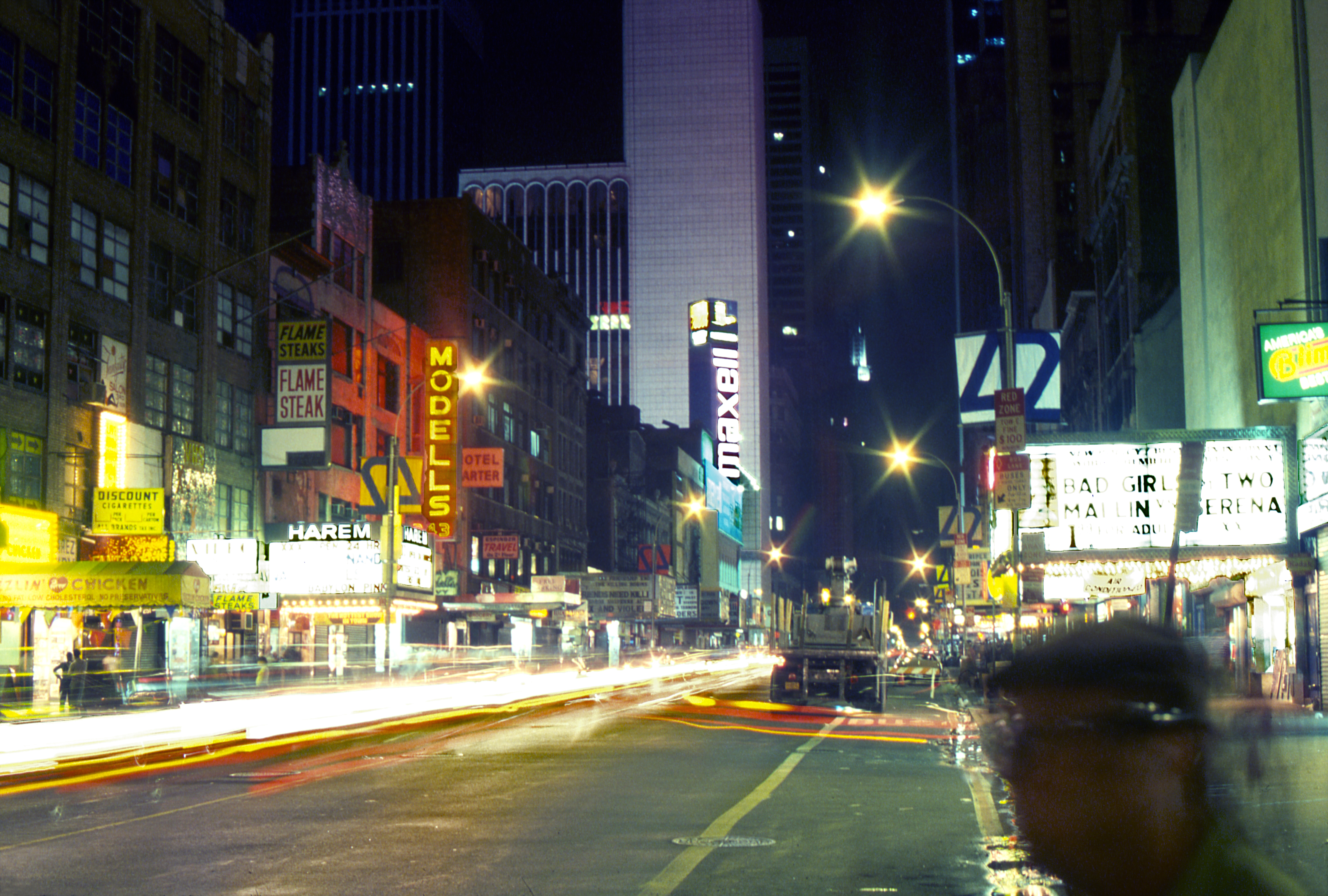
You were in a Big City and there were Bright Lights

West 42nd Street between 7th and 8th Avenues (1984). Photo by TedQuackenbush [CC BY SA 3.0] via Wikimedia.


Bright Lights, Big CityBright Lights, Big City by Jay McInerney

My rating: 4 of 5 stars


I "discovered" Jay McInerney when I watched the BBC2 documentary Sincerely, F. Scott Fitzgerald. McInerney's first novel remains a winner. 

Set in Mahattan in 1984, the story covers how almost everyone felt in the 1980s. That time when you were done with nightclubs, but there was nothing else to do. You kept going back, but all you wanted to do was something else. 

This is the first novel I have ever read in the second person. McInerney makes it work. Apparently it was turned into a film starring Michael J. Fox (I never saw it) and also an Off-Broadway rock musical from 1999. 

I often listen to music while reading and writing, usually minimalism and John Adams in particular. The trouble is I have been listening to the same music over and over for more than ten years and sometimes I have to change. 

Lately I have been in the habit of listening to music from the time the book was written or from the country of origin of the author. Most of the books I read tend to be older, so listening to 1984 was never going to happen. 

I typed "bright lights big city" into Spotify, and hey presto! There was the rock musical version of the book. This was the funniest experience I have had with music and reading. 

Many of the songs use the exact words from the book and I had to change the music when I found myself reading the exact words of the book while listening to them at the same time in the musical's soundtrack. 

The song "Coma Baby" had me cacking myself. 

Part of the story reminds me of Guy de Maupassant's Bel Ami sans the cocaine. But it finishes a bit like Tom Cruise's Risky Business or Matthew Broderick's Ferris Bueller's Day Off. It reads like a young person's novel but there is certainly genius there. 

I am yet to read another McInerney, but it is worth exploring more of his work. But the most memorable thing for me was the incident with the music and the book. Not to take away from the book, but the experience fitted right in with the tone of the novel. 

What it must have been like to be so young and write so well.


View all my reviews

© 2025 Dr Michael de Percy
made with by templateszoo