Nietzsche in: "I Smell a Decadent"

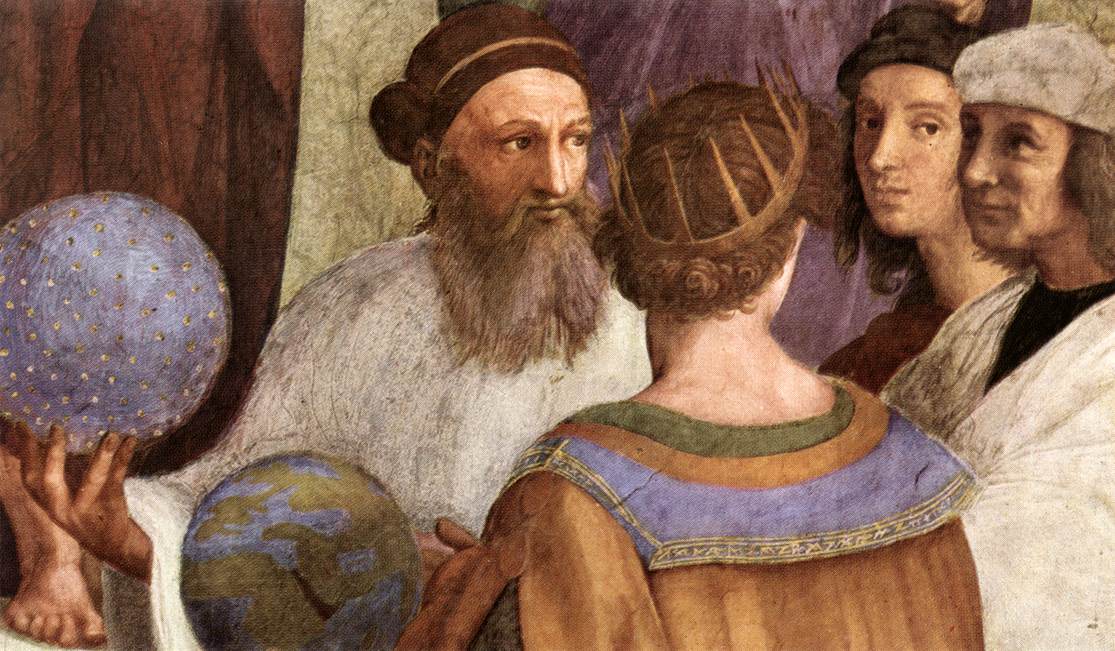
The School of Athens [featuring Zoroaster] by Raphael, 1590. Public domain via Wikimedia.


Ecce HomoEcce Homo by Friedrich Nietzsche

My rating: 4 of 5 stars


Nietzsche's autobiography is bewildering. The title, Ecce Homo, means "Behold the Man" in Latin, and is ascribed to Pontius Pilate when he presented Jesus to the mob. The title is clever in that Nietzsche, in concluding, is "Dionysus versus Christ" (p. 143). But this seems to me to be misleading when the subtitle (which is absent from this Dover version), reads "How One Becomes What One Is". Without the subtitle, one might justify an off-handed rejection of Ecce Homo as little more than vanity given too much regard by posterity. Indeed, I wonder had Nietzsche written this today, would he have ever been known? At times I felt that Nietzsche was of a privileged class and was able to publish at will, but this is not entirely the case. Nietzsche's father, a Lutheran pastor, had worked for the state and, following his premature death, this qualified Nietzsche for a scholarship. Hardly peak bourgeoisie, yet Nietzsche was a polymath; surely symptomatic of genius. If the subtitle is considered during the reading, then "how Nietzsche became Nietzsche" is less troubling to the modern mind. At the same time, Nietzsche goes out of his way to tell us that the effeminate, decaying, degenerative way perpetuated by Christianity is a denial of nature, of the body, of the present - so why would he be all meek and modest? Hence my bewilderment. Believe "neither in 'ill-luck' nor 'guilt'" - this is the opposite of a decadent (it is Nietzsche) (p. 13). "Unselfishness" and "neighbourly love" are conditions of the decadent, these are signs of weakness; pity is not a virtue (p. 18). Nietzsche tells us how he has never felt bad about himself, no guilt, no self-flagellation. The basic argument is that Christianity has poisoned us against ourselves - not faith, not God per se, but the religion of Christianity. Undoing this decadence is therefore essential. But atheists find no solace, either: Socrates is no role model. Nietzsche hints at Heraclitus as one of the few who understood (at least through the Stoics) (p. 73). This is interesting in that Heraclitus had a particular view of God and the gods that one steeped in the atheistic view of Nietzsche will struggle to comprehend. The most important words from Ecce Homo outline Nietzsche's philosophy for living: amor fati (p. 54):
My formula for greatness in man is amor fati: the fact that a man wishes nothing to be different, either in front of him or behind him, or for all eternity. Not only must the necessary be borne, and on no account concealed,- all idealism is falsehood in the face of necessity,- but it must also be loved...
Nietzsche writes disapprovingly of equal rights, particularly for women (p. 65), yet, at the same time, in addition to his view of the "opiate of the masses", betrays a Marxian loathing for the decadence of the "false economy" of "the division of labour" (p. 76). He goes on to address the problem of our current times: the "large number of young men... all in... [a] state of distress" because of the false "calling" to vocations that are unnatural and lead to a "feeling of emptiness and hunger" (p. 87). With so much going on, it is unlikely that a reading of Nietzsche's work in its entirety is enough to comprehend his insights from the rabbit hole of the human soul. But if I have taken away just one thing from Ecce Homo, it is a deeper understanding of the concept of amor fati. Its opposite can be seen in those who reject the body (interesting that Nietzsche says he can "smell" the decadents), where the golden arrow of consumption masks much of the truth (that many could not face if it were revealed, but can happily consume while it is well-masked), and I take it that Nietzsche meant both the corporeal and spiritual aspects of the analogy. But I will let Nietzsche have the last word:
...that which is necessary does not offend me. Amor fati is the core of my nature.


View all my reviews
Romans? Lend me your ears: or, Nietzsche: The Neo-Con Flâneur

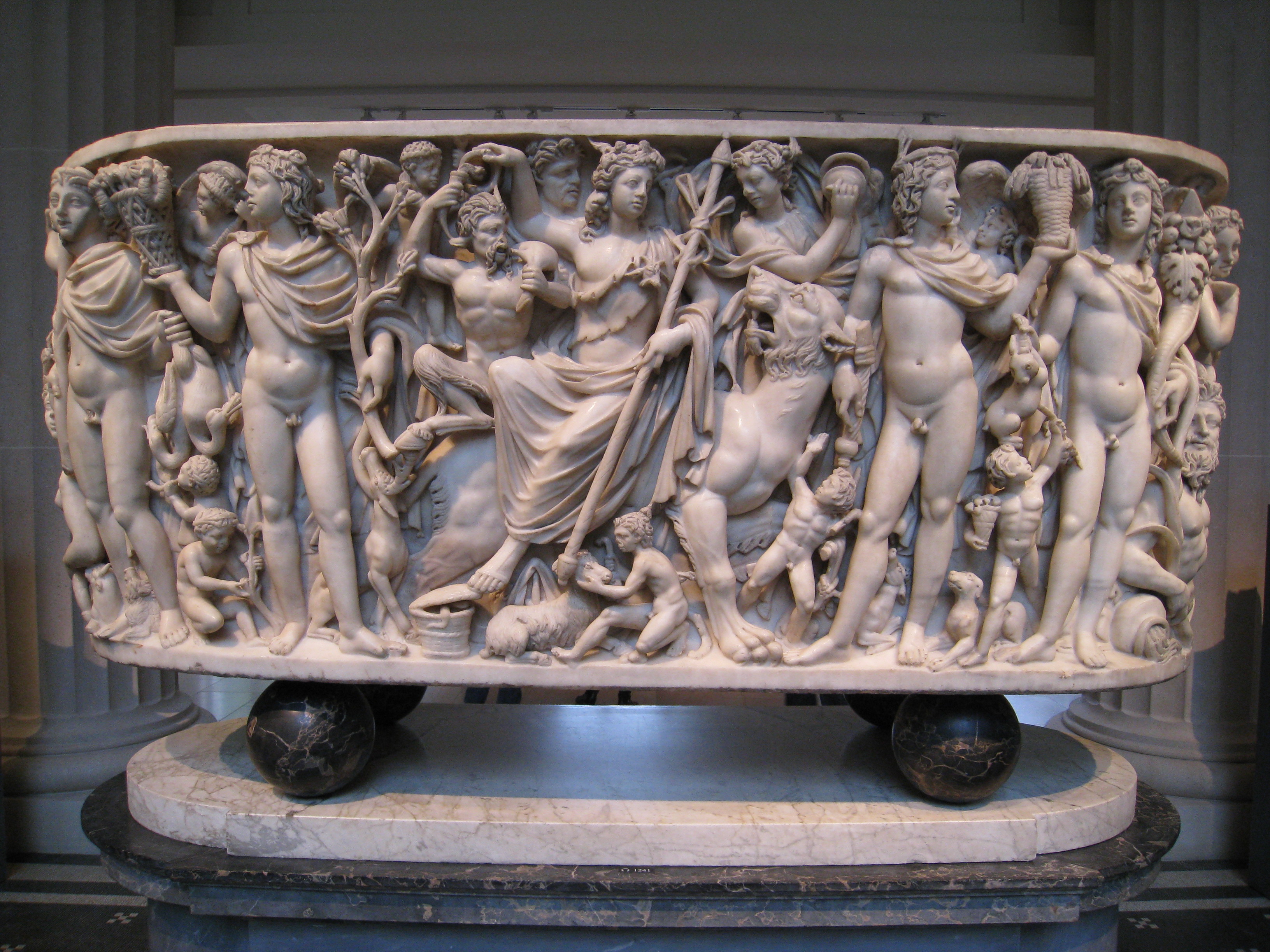
Marble sarcophagus with the Triumph of Dionysus and the Seasons; Roman, circa 260-270 CE; Metropolitan Museum, New York [Public domain] via Wikimedia.


Twilight of the Idols/The Antichrist/Ecce HomoTwilight of the Idols/The Antichrist/Ecce Homo by Friedrich Nietzsche

My rating: 5 of 5 stars


The first interesting thing I discovered about Nietzsche is something I suspected when I read Beyond Good and Evil: Nietzsche "learnt much from La Rochefoucauld" (p. viii). And to start off with first principles, Nietzsche makes an interesting observation: morality is "a misrepresentation of certain phenomena, for there are no moral facts whatever (p. xi). I have now come to terms with the idea of Dionysian "chaos" versus the Apollonian "order". Interestingly, this struck me last night at the Canberra Symphony Orchestra's performances of Prokofiev's Piano Concerto No. 2 in G minor, op. 16 (with acclaimed Australian pianist Tamara-Anna Cislowska as the soloist), and Shostakovich's Symphony No. 9 in E flat major, op. 70. My friend and colleague, a sociologist, who invited us to the concert, has often spoken of these two opposing approaches. But until now, I have been ignorant to the depth of meaning that is so readily missed when one's antennae are not properly directed. And so, Nietzsche sees art as "Dionysian. It is amoral". "Christian art" is an oxymoron, yet Islam is "a virile religion, a religion for men". Nietzsche sees Christianity and alcohol as "the two great means of corruption" (p. 160). A central message (one of too many!) is that, "where the will to power is lacking, degeneration sets in" (p. 97). Nietzsche blames Saint Paul for destroying Rome, and Luther for destroying the Renaissance. Well I never! Kant perpetuated some of the decay, but Goethe, the antipodes of Kant, "disciplined himself into a harmonious whole, he created himself" (p. 81). Further, and while Nietzsche may well have predicted the World Wars, he may also have predicted the decay of our current institutions. Nietzsche argued that we have forgotten the purpose of our institutions (something that would seem apparent in my understanding of theories of institutional change), in effect, institutions require:
...a sort of will, instinct, imperative, which cannot be otherwise than antiliberal to the point of wickedness: the will to tradition, to authority, to responsibility for centuries to come, to solidarity in long family lines forwards and backwards in infinitum. If this will is present, something is founded which resembles the imperium Romanum: or Russia, the only great nation today that has some lasting grit in her.
In speaking of first principles, Nietzsche appears as a Neo-Con Flâneur (p. 72); yet he does not mince words:
First principle: a man must need to be strong, otherwise he will never attain it. - those great forcing-houses of the strong, of the strongest kind of men that have ever existed on earth, the aristocratic communities like those of Rome and Venice, understood freedom precisely as I understand the word: as something that one has and one has not, as something that one will have and that one seizes by force.
I can't pretend to know everything about Nietzsche, and I doubt I can commit to further study beyond a once-reading of the majority of his work. But something has changed in me as a result. I will blog about Ecce Homo in a subsequent post, as I am reading it in a separate book with an easier-to-read type-font, but from Nietzsche's autobiography, he arose from illness (and, paradoxically, to return to it soon after) to suffer no longer from "'ill-luck' nor 'guilt'". He "is strong enough to make everything turn to his own advantage" (p. 176). In this way, Nietzsche is much like Marcus Aurelius: Amor Fati. And no longer can my response be "merely" academic: I feel a weight of centuries lifting, I see why our institutions are crumbling, I fear the solution will not be forthcoming until the next major crisis disrupts human society yet again; I know that this will all be forgotten by future generations. And so time will march on. But Nietzsche does not leave me pessimistic, nor does he leave me disturbed as Viktor Frankl does. He leaves me free. Is this too dramatic? Read what I have read and tell me. I am all ears.


Ask not "What is the Meaning of Life?": The question is being asked of you!

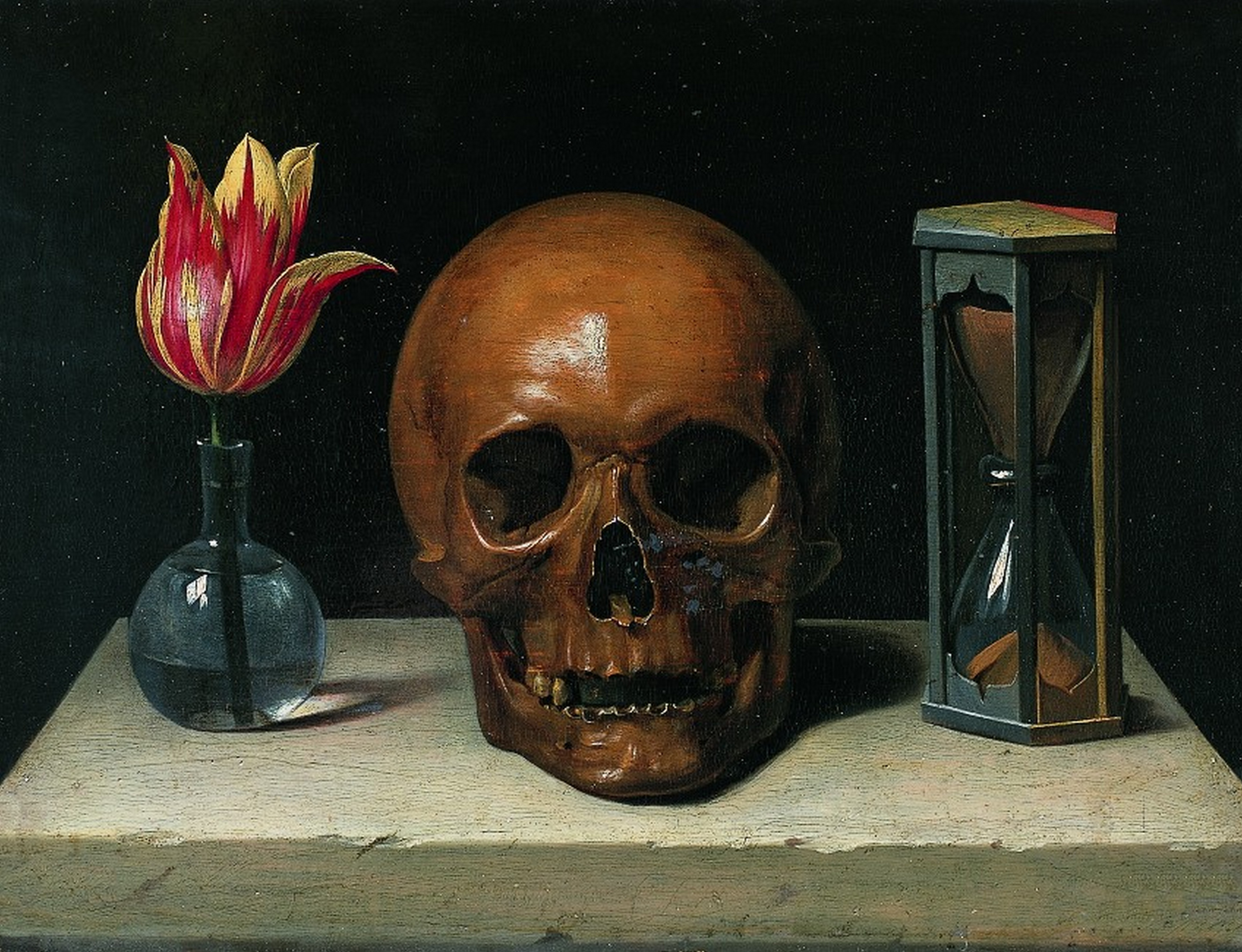
Still-Life with a Skull (vanitas painting) by Philippe de Champaigne, circa 1671. [Public domain], via Wikimedia Commons.


Man's Search for MeaningMan's Search for Meaning by Viktor E. Frankl

My rating: 5 of 5 stars


I mistakenly read Frankl's sequel to this book back in December 2016. In Man's Search for Ultimate Meaning, Frankl focused on the "existential vacuum" and psychological concepts in some detail. I barely recall this work and when I looked at it just now, the lack of pencil markings in the book means I cannot recall the parts that resonated, or the ideas I wrote about in my (rather short) review of the sequel, I also discovered that the key concepts relating to logotherapy were outlined, but I had no recollection of logotherapy, Frankl's "Austrian School" of psychology. Man's Search for Meaning is in two parts. The first part outlines Frankl's experience as a prisoner at Auschwitz and other concentration camps during World War II. He does not go into the detail of the horrors there, but focuses on how people coped or didn't cope with suffering. The word "suffering" is important in that, if one has no choice but to suffer, then suffering can give purpose to life. In the second part, Frankl outlines his logotherapy in some detail. How does logotherapy fit in with Freud and Adler? Freud focused on man's (sic) will to pleasure; Adler focused on man's (sic) will to power (obviously drawing on Nietzsche); whereas Frankl draws on man's (sic) will to meaning as a central element of human behaviour, happiness, and self-actualisation (somewhat in the Maslow sense of the word, but Abraham Maslow is not mentioned). Some quotes are worth noting:
...unnecessary suffering is masochistic rather than heroic (p. 148). 
Live as if you were living for the second time and had acted wrongly the first time as you are about to act now (p. 151). 
...happiness cannot be pursued; it must ensue (p. 140). 
...man (sic) is ultimately self-determining... [He] has [good and bad] potentialities within himself; which one is actualized depends on decisions but not on conditions (p. 135). 
Nietzsche: ""He who has a why to live for can bear almost any how" (p. 109). 
...suffering may well be a human achievement (p. 108). 
...only the men who allowed their inner hold on their moral and spiritual selves to subside eventually fell victim to the camp's degenerating influences (p. 78).
I found this book disturbing: enlightening, enraging, sad, hopeful, empty, full, academic, spiritual, contradictory, confronting, conservative, even judgemental. But it made me think deeper than I may have thought before. And there are techniques, too, for dealing with "anticipatory anxiety" - "hyper-intention" and "hyper-reflection". (Put simply, the paradox that the harder we try to make something work, the more we psych ourselves out. In certain cases, one can use this paradox to have a positive effect. Frankl gives the example of a man who sweats profusely, and the more self-conscious he is, the more he sweats. Frankl has the man say to himself "I will show them how much I can sweat!" and paradoxically, he doesn't sweat at all.) This paradox serves another purpose in the pursuit of meaning:
What is called self-actualization is not attainable at all, for the simple reason that the more one would strive for it, the more he (sic) would miss it. In other words, self-actualization is only possible as a side-effect of self-transcendence (p. 114).
This leads to what I think is Frankl's most important lesson:
Ultimately, man (sic) should not ask what the meaning of life is, but rather he must recognize that it is he who is asked (p. 113).
From what I can gather, in Man's Search for Meaning, Frankl outlines how his experience in the concentration camps helped him refine his concept of logotherapy, something he had written about and was writing about before he was taken prisoner. He mentions modern problems concerning the "existential vacuum", in particular, "boredom". But it is not until Man's Search for Ultimate Meaning that this is covered in more detail. I say as far as I can work out because there is a lot to comprehend in these two books, and the disturbing nature of the original (now classic) work continues to haunt my sleep, let alone coming to grips with the details of logotherapy that I was quite able to overlook through my ignorance and poor reading technique the first time around. As Epictetus said: if you would learn, be prepared to look the fool. A key lesson learnt from this experience is in comparing my current reading technique to what I was doing back in 2016; the improvement is palpable. Mortimer Adler was right and I am glad I overcame my resistance to marking and taking notes in my books. Another lesson is that a single reading of a book may not be enough, especially when subject matter that is new to me is readily over-looked. Yet, much like asking myself "What is the meaning of my life?", I need to ask myself "What is the point of my reading?". The answer is rather simple: it is to learn. Maybe I can draw on the hyper-intention paradox technique: I can tell myself that my life has no meaning and wait for meaning to appear. Or better yet, I can live the rest of my days as if it really were a second chance, and let my learning allow happiness to ensue. The real paradox is that it has been happening already without me even trying. And while I doubt I can understand Frankl until I have finished reading Nietzsche and made a start on Wittgenstein, there is enough in this book (in particular, the quotes outlined above), to keep me going for some time.


© 2025 Dr Michael de Percy
made with by templateszoo