Book Notes: "The Qur'an: A Biography" by Bruce Lawrence

The Qur'an: A Biography (Books That Shook The World)The Qur'an: A Biography by Bruce B. Lawrence

My rating: 4 of 5 stars


I remember reading about this book while in Amman, Jordan in 2006. Bruce Lawrence mentions that he was assisted by Dr Ibrahim Abu Nab of Amman in the beginnings of this book. I have had it on my "reading now" shelf for years, and despite being half-way though, I started from the beginning yesterday and finished it today. I think the problem with my earlier attempt at reading the work was my lack of historical, geopolitical, and theological knowledge at the time. So this reading I found rather gripping. The book is a chronological biography of the Qur'an, and is part of a series of "Books that Shook the World". If this book is the standard for the series, then I will invest in some of the other books. What I like about Lawrence's work is that it is scholarly, contemporary, and pragmatic all at once. The fifteen chapters each present a different story about the Qur'an, in chronological order, and from various cultures and geographical locations. It might have been useful to read this book before I read Pioneers of Islamic Scholarship by Adil Salahi, and I may now revisit this work to pick up on many of the names and chronologies that I struggled with on my first reading. I do not think this is a book for beginners, although it is easy enough to read, but much would be lost without a basic understanding or a willingness to undertake background study while reading the book. While it took me a long time to read, I am glad I had put it off for so long, otherwise I would have missed a good deal from my lack of background knowledge.


View all my reviews

Book Notes: "The Analects" by Confucius

The AnalectsThe Analects by Confucius

My rating: 5 of 5 stars


This was my first proper reading of Confucius. Again, the ancients set the tone for so many things that followed. Given that Confucius lived during the 6th century BCE, I am not surprised to read familiar words that have somehow crept into modern language but without sufficient acknowledgement of the original source. There are many surprising similarities with Stoicism, and, dare I say, Christianity. While reading the Stoics, I was conscious of the need to avoid the Occidentalist assumptions, hence my choice to read Confucius now. This work has encouraged me to read The Book of Odes, Shi-King to lift the veil of my ignorance in this important area - religion, spirituality, ethics, morals, philosophy, call it what you will. It is regrettable that I do not have enough life remaining to study all the things I wish to learn.


View all my reviews

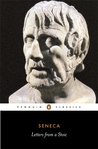
Book Notes: "Letters from a Stoic" by Seneca

Letters from a StoicLetters from a Stoic by Seneca

My rating: 5 of 5 stars


The Letters is regarded as one of the three key Stoic works, along with Marcus Aurelius' Meditations and Epictetus' Discourses. My initial thoughts were that Seneca's letters provided gems of genius amid banal everyday topics. Indeed, one critic compared Seneca's style with a boar taking a whiz (provided in the detailed notes to the letters). But the moments of genius continue to resonate as if Seneca showed me, empirically, a primal instinct. There is so much of the source of contemporary social norms in this work. I am often surprised how modern complaints were "old hat" even in the time of the classics. For example, Seneca despises those who follow the crowd and let the majority following determine right and wrong. Further, he complains about the modern conveniences and how people suffer from what we might today term "affluenza". Maybe this does not bode well for the present state of affairs. I have learnt a great deal from this book, as I did with Meditations, and I am eager to delve into Discourses.


View all my reviews
© 2025 Dr Michael de Percy
made with by templateszoo