Donate


 |
| © Depositphotos.com/@Sonar |
I often quip about any mention of Jag based on the tongue-in-cheek humour
(to non-Jag owners!) from the series Mad Men, where the Americans make endless
comments about the Jaguar’s unreliability.
But the E-type Jaguar has a special place in the development of Australian muscle cars.
In Australian motorsport, the E-type Jaguar's fame was confirmed after Bob Jane (founder of Bob Jane T-Mart) won the 1963 Gran Turismo competition in a 1963 E-type Jag.
The Ford Cortina Mk1 GT and later the Mini Cooper S dominated the early to mid-60s events,
leading to the development of the Ford Falcon XR GT. There was considerable pressure
for Australia to develop its own muscle cars and Holden (GM - Chevrolet) and
Ford Australia (earlier Falcons were based mostly on American models) saw a change
from UK-inspired vehicles to US-inspired vehicles.
Finally, Australian-inspired
vehicles beginning with the Ford Falcon XR GT and later the Holden Monaro GTS 350 and
Holden LJ Torana XU-1 appeared.
The Australian muscle car period peaked with the development of the
Ford Falcon XY GTHO Phase III, for a time touted as the fastest 4-door production
car in the world, and declined with the Ford Falcon XA GTHO Phase IV amid
controversy over the impact of muscle cars on the streets. The "Supercar scare" of 1972 saw manufacturers pull out of the race-bred street car game.
At the tender age of seven, I had the honour of sitting in Allan Moffat’s #1 XC Falcon GT after it won the 1977 Hardie-Ferodo Bathurst (with Colin Bond’s #2 XC Falcon
GT finishing in second place, even though Moffat’s car was buggered and they
finished 1-2 for promotional reasons)
at Roselands Shopping Centre in Sydney (it was then considered the largest
shopping centre in the southern hemisphere). The
two-door Falcon “hardtop” remains my favourite car to this day.
I was fortunate enough to drive a 1973 XB GS Fairmont as my first car, so
although I am contented with my automatic Panzers these days, there is a
fair bit of petrol head in my past. In good condition, the Fairmonts sell at auction for around
$36,000 these days but mine rusted out in the Cairns weather. So I do have a soft spot for Aussie grunt.
But the E-type Jaguar, combined with Bob Jane and his brother Bill Jane, is where it all began. Indeed, I would argue that the E-type Jaguar heralded the Australian muscle car in Australian motorsport.
But the E-type Jaguar, combined with Bob Jane and his brother Bill Jane, is where it all began. Indeed, I would argue that the E-type Jaguar heralded the Australian muscle car in Australian motorsport.
But could you pass the Australian “pub test” with the argument that the E-type
Jaguar was responsible for heralding the Australian muscle car era?
Well, yes!
Why? When you look at the Great Race results from 1963 until the 1984, it was dominated by Fords and Holdens (except for 1966). But what if we go back just a little bit further? It was Jaguar.
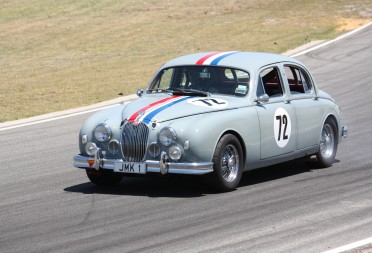
The winners of the first two Australian Touring Car Championship races (the origin of the Great Race at Bathurst) were Jaguars in 1960 and 1962. But the 1960 winner was a Jaguar Mark 1 "Saloon", whereas in 1962 the E-type Jaguar was a genuine sports car.
After that, beefed-up production sedans dominated again until the XR GT. So in Australian motorsport - the type I grew up with - the E-type Jaguar heralds the beginning of the Aussie muscle car.
And I reckon that would pass the "pub test".
Well, yes!
Why? When you look at the Great Race results from 1963 until the 1984, it was dominated by Fords and Holdens (except for 1966). But what if we go back just a little bit further? It was Jaguar.
The winners of the first two Australian Touring Car Championship races (the origin of the Great Race at Bathurst) were Jaguars in 1960 and 1962. But the 1960 winner was a Jaguar Mark 1 "Saloon", whereas in 1962 the E-type Jaguar was a genuine sports car.
After that, beefed-up production sedans dominated again until the XR GT. So in Australian motorsport - the type I grew up with - the E-type Jaguar heralds the beginning of the Aussie muscle car.
And I reckon that would pass the "pub test".